<span class="vcard">Angie</span>
Angie

Structural Connection Between Major, Relative, & Parallel Minor

Fluency Session: Structure

Where the Major & Minor Integrate

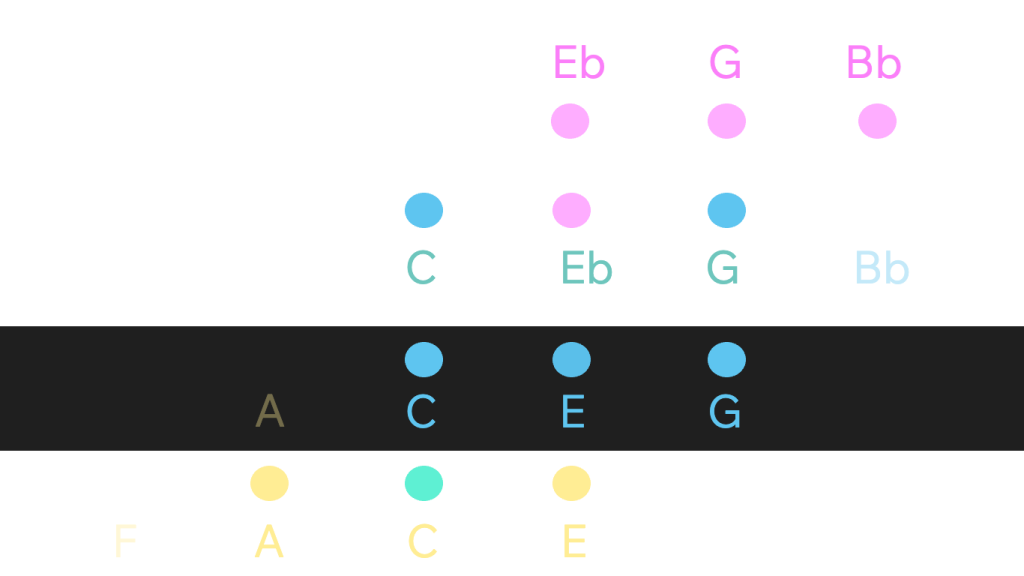
Ascending 1 - 3 - 5 | Shift on 3b

Simple pattern exercise that unfolds the structural correlations between the Major, Relative Minor (Natural), and the Parallel Minor to the Major.

Begin | Determine Your Initial Position

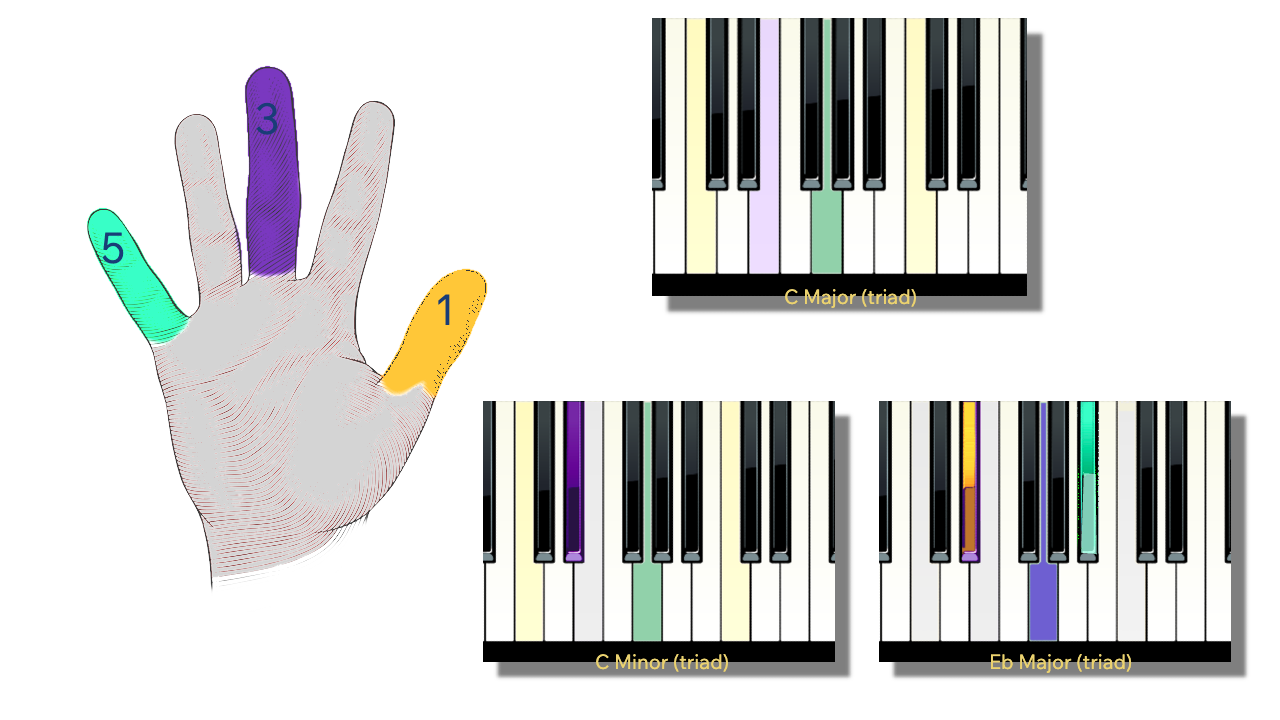
Place your hand so that you can sound two notes, a fifth apart.

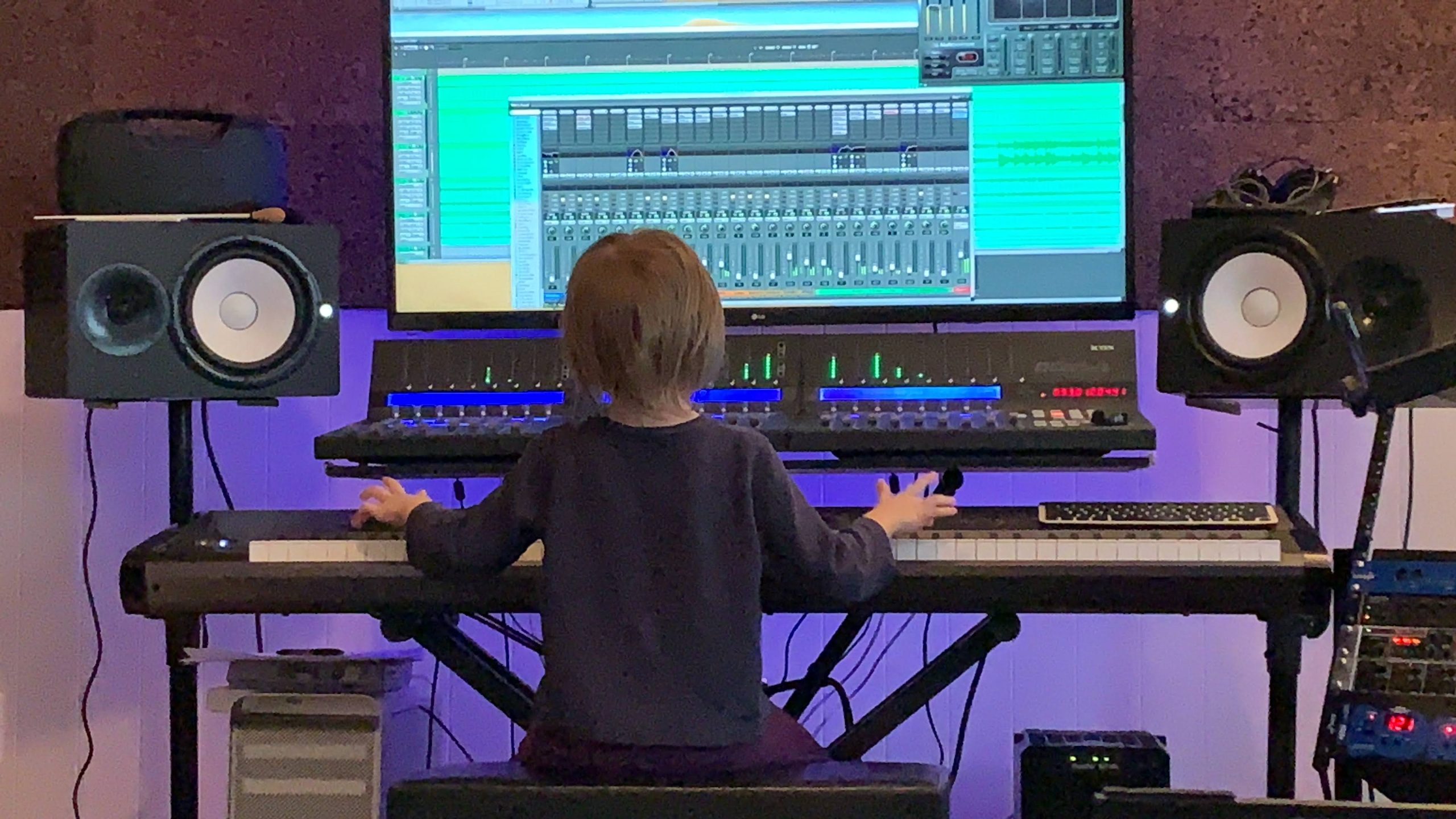
  • On keys (image), this could be a C and G.
  • On guitar, a simple power chord, E and B.
  • Cello/Vio: two adjacent open strings - your choice
  • Winds/Brass: Pick a starting note and sound its fifth (above)
    Example: Eb to Bb (sax, etc), C to G (trumpet)

Find the Major Triad

Maintain the shape of the fifth and add the major third

  • Keys: C E G
  • Guitar: E G# B
  • Cello: G (on C) B (on G) D (open) 
    Stretch... 🙂
  • Vio: D (on G) F# (on A) A (open)
    Yes, there is reason string instruments play inversions, but for the sake of this exercise, keep the tonal order and center
  • Winds: Eb G Bb
  • Trumpet: C E G

Flat the 3rd

Move the third down a half step

C E G becomes C Eb G

E G# B becomes E G B

G B D becomes G Bb D

D F# A becomes D F A

Eb G Bb becomes Eb Gb Bb

Shift the Tonal Center

What was the 3 became the flat 3, or 3b
Now that 3b becomes the new 1 (shift the tonal center)

When began with the major triad C E G
1=C 3=E 5=G
Here, the tonal center is C

Then we dropped the third by a half step C Eb G
1=C 3b=Eb 5=G
Here, the tonal center is C, and that C has taken on a natural minor flavor

__________________________
Now we will shift the existing 1 to its new position, the existing 3b
What was 1=C,  is now 1=Eb

With our new 1 (Eb) determined, we resume our major triad shape (1-3-5), beginning this time on Eb
1=Eb  3=G  5=Bb 
Eb G Bb

The tonal center has become Eb

Guess what, you can repeat this in however many iterations you'd like, simply by moving through the steps, ascending in pitch. 

Want to know how it works descending in pitch? Check out the next tab.

video coming soon

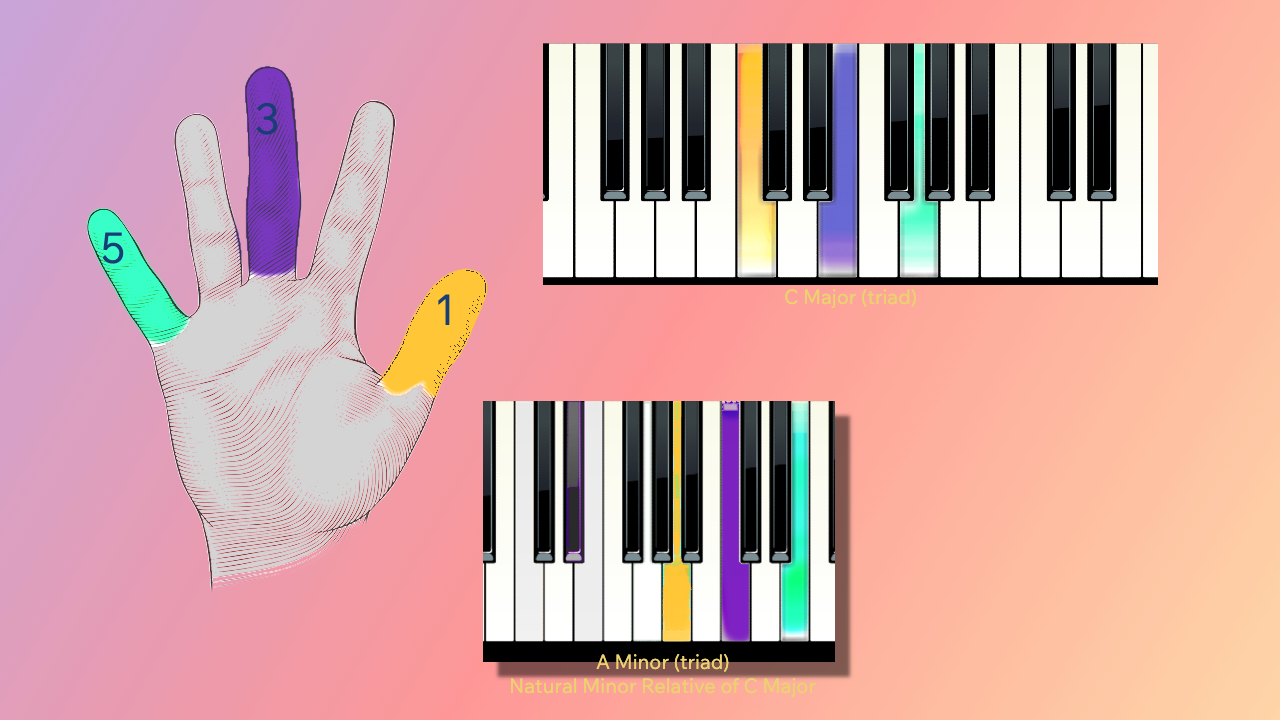
Descending 5 - 3 - 1 | Shift to the third below (same note as the 6th)

Simple pattern exercise that unfolds the structural correlations between the Major, Relative Minor (Natural), and the Parallel Minor to the Major.

Begin | Determine Your Initial Position

Place your hand so that you can sound two notes, a fifth apart.

  • On keys (image), this could be a C and G.
  • On guitar, a simple power chord, E and B.
  • Cello/Vio: two adjacent open strings - your choice
  • Winds/Brass: Pick a starting note and sound its fifth (above)
    Example: Eb to Bb (sax, etc), C to G (trumpet)

Find the Major Triad

Maintain the shape of the fifth and add the major third

  • Keys: C E G
  • Guitar: E G# B
  • Cello: G (on C) B (on G) D (open) 
    Stretch... 🙂
  • Vio: D (on G) F# (on A) A (open)
    Yes, there is reason string instruments play inversions, but for the sake of this exercise, keep the tonal order and center
  • Winds: Eb G Bb
  • Trumpet: C E G

Shift the Tonal Center

What was the 5 shifts now to what was the 3. We can also say what was the 1, drops a third to its new position (C to A below)

C E G was previously 1=C 3=E 5=G
Now E=5, C=3, and A=1

Shift the tonal center from C to A

_______________________________

We began with the major triad C E G
1=C 3=E 5=G
Here, the tonal center is C

Then we dropped the shape (1-3-5) down a third
C moves to a third below, A
E moves to C
G moves to E

We now have: 
1=A 3=C 5=E
The tonal center, our anchor, becomes A
and it has taken on a natural minor flavor


__________________________
C Major has the same ingredients, the same sharps/flats, as the key of A Minor (Natural). They are relatives (cousins).

Melodic Minor

Melodic

    Just like an M requires us to climb as we write it (up the M, up the mountain)…
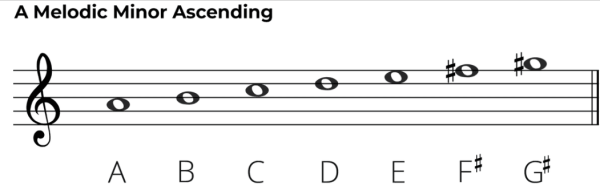
When ascending in pitch, the Melodic Minor Scale (from the Natural Minor) is created by raising the 6th and 7th

Flat 3rd 3
Sharp 6th # 6
Sharp 7th #

A Melodic Minor Ascending

Another way to look at it is using the parallel Major scale:
If we use the major scale, when ascending, we flat only the 3rd

Flat 3rd 3


Welodic

In Classical Melodic Minor, the ascending and descending sequence of notes change
The Descending pattern follows a Natural Minor

The Melodic Scale in descending scale is different from the ascending scale. 
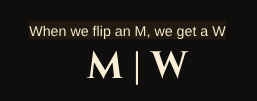
When we flip an M, we get a W
   W starts at the top, and slides down hill.

Flat 7th ♭7
Flat 6th 6
Flat 3rd 3

Jazzlodic Minor

  ( jazz Melodic Minor) 

In Jazz Melodic Minor, the notes don’t change, regardless which direction the scale is approached. 

Flat 3rd 3
Sharp 6th # 6
Sharp 7th #

A Melodic Minor

* A leading tone, responsible for creating tension, is when the seventh scale degree is only a semitone away from the root note. 

The Quiet After

Conjured by Chance

Dice Roll Composition Series​

The Quiet After

 A moment of calm, and a piano wanting to share a few moments of its day..

This is spontaneous composition/conversation, simple and unformed. I’m just exploring the dice here, following the current, allowing. 

It unfolded as it did, and will likely find itself developed into something further at some point in the future.

  • The idea of this series isn’t necessarily to create fully produced material, it is to play. The dice offer their shape, the frequencies offer their cadence, and the rest just sort of shows up when we set the energy into motion.

A spontaneous conducting of my favorite type of puzzle, conceived by chance, and the roll of intent.

Inclusive Music Community – Mobile Register

Music Community Register

Inclusive Music Community – Register

Fluency Sessions

MUSIC

Join our online community

Find support in a safe, judgement free zone

Explore your questions and piano related experiences

Register to Join a Session (Free)

Kindness, patience, and genuine welcome are at the heart of these sessions. Each participant is respected and encouraged, whatever their background or experience. All can explore and enjoy music at a comfortable pace, with support and a sense of safety, free from pressure or judgment. Here, music is for everyone, just as they are.

Music Community Register

Our vision is to create a reality where music learning and expression is accessible to everyone. Our sessions are open to all, and free to join. We are funded through the support of various organizations and patrons – click to learn more.

OUR GOAL

Provide a resource for those developing their skills and relationship with the piano, where all approaches and methods, learning styles and ideas are welcome.

Our Vision

Music can weave our stories into existence, contain them, and preserve them indefinitely. Music is for connection, expression, and appreciation. You'll find an authentic opportunity to explore and develop your own way with the piano and music in the spaces we create with one another.

Piano Fluency Inclusive Community

Fluency Sessions

PIANO

Join our inclusive (free) online community 

Find support in a safe, judgement free zone

Explore your questions and piano related experiences

Do any of these resonate?

  • How do I improve the speed and accuracy of my playing?
  • What are some effective warm-up routines?
  • How do I stay motivated when progress feels slow?
  • How do I practice hands separately and together effectively?
  • How do I overcome performance anxiety or “stage fright”?
  • What’s the best way to memorize pieces?
  • How do I develop better sight-reading skills?
  • What can I do to keep my playing relaxed and avoid tension?
  • How do I reach fluency on difficult passages?
  • Are there exercises specifically for finger independence and strength?

We meet over Zoom most Thursdays at 4pm (MT/UTC-6)

Be part of shaping this inclusive community

Come with your questions, ideas, and requests for support
-each session is created from these 

OUR GOAL

Provide a resource for those developing their skills and relationship with the piano, where all approaches and methods, learning styles, and ideas are welcome.

Our Vision

Music can weave our stories into existence, contain them, and preserve them indefinitely. Music is for connection, expression, and appreciation. You'll find an authentic opportunity to explore and develop your own way with the piano and music in the spaces we create with one another.

Clips from our sessions...each is unique, shaped by those present

Get the Sessions Link

Kindness, patience, and genuine welcome are at the heart of these sessions. Each participant is respected and encouraged, whatever their background or experience. All can explore and enjoy music at a comfortable pace, with support and a sense of safety, free from pressure or judgment. Here, music is for everyone, just as they are.

Complete the form and we'll send you an email with the meeting link

Piano Community Register

Our vision is to create a reality where music learning and expression is accessible to everyone. Our sessions are open to all, and free to join. We are funded through the support of those who know why this matters – click to learn more.

Inclusive Piano Community – Mobile Register

Register to Join a Session (free)

Kindness, patience, and genuine welcome are at the heart of these sessions. Each participant is respected and encouraged, whatever their background or experience. All can explore and enjoy music at a comfortable pace, with support and a sense of safety, free from pressure or judgment. Here, music is for everyone, just as they are.

Once this form is submitted, you’ll receive an email with the zoom link information

Piano Community Register

A Meadow Full of Stars

They decided the dolls wanted to dance

"I think they'll just know what to dance when we give them the music..."

in their own space

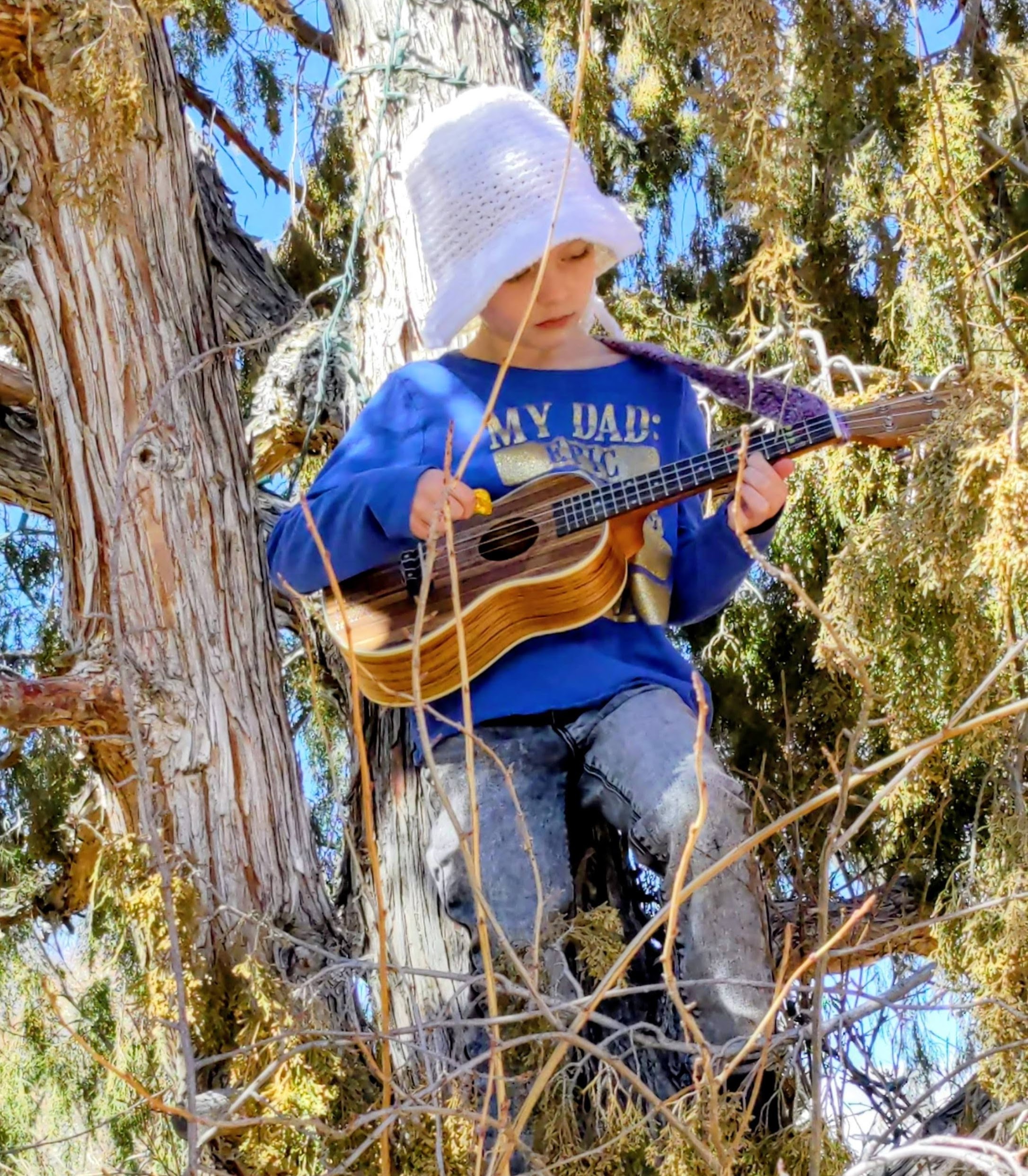
She chose to create music for the dolls to dance to. There were about 7 different dances all together, and her brother was not only her tech guy, he was her creative piano accompanist. 

Organic Musical fluency acquisition

music belongs to us all

Musical fluency is about inhabiting music, moving beyond traditional learning models and embracing a more organic, immersive approach to musical expression.

Childhood, revered and preserved, offers a world full of curiosity, experimenting, and finding patterns that create the connections that guide us. It isn’t ticking boxes, impressing judges, or collecting gold stars. Organic acquisition of music is the same: listening, wandering, and letting music fill our world as naturally as breathing.

When I work with someone, we set aside the “shoulds” and “have to.” We dive into sound, one note, harmony, and rhythm at a time, letting each discovery feel like pieces of magic. I’ve seen so many people step out of the shadows of judgment and feeling “not enough,” and return to music as something woven into the fabric of their being…human and thriving.

My hope is that each of us knows music in freedom and appreciation, embracing our own storysongs.
A woven heirloom, inspiring, and worthy.

Dismantling Anxiety

Dismantling Performance Anxiety

The moment we reach for an instrument, open our mouths to sing, or simply begin listening, music invites us into connection

Then, enter the “wrong” note.

Welcoming Ourselves Back Into the Music

May you discover and thrive within your music

  • Our Narrative

    When we begin to ask kinder questions and challenge harsh inner voices, we can create new stories that are compassionate, open-ended, and uniquely our own.

  • Unwinding Anxiety

    What if we could gently unravel the internalized constraints? What if we could rewrite the stories we tell ourselves, revise patterns and tension in the body, formed in response to critique or pressure, and discover what it is to experience freedom and fluency in music?

  • Worthiness Blossoming

    Every sound you make holds value. Every attempt is worth honoring. With each conversation, may you find a little more room to wander and appreciate.

  • Judgement

    Anxiety is a very human response to vulnerability, and it thrives in spaces where perfection overshadows play, and where rules and expectations seem louder than intuition and connection.

  • Music was never meant to be full of shoulds

    ...what music should sound like, how it should be constructed, or who should be allowed to create and play it

  • Untangling Fear

    In this space, we celebrate our humanness and the wonder of the journey. We acknowledge the courage it takes to show up, and we invite each other to gently untangle fear, one breath and note at a time.