<span class="vcard">Angie</span>
Angie

Online Musical Fluency Community

Fluency Sessions

MUSIC

Join our inclusive online community 

Find support in a safe, judgement free zone

Exploring your questions and experiences of learning music & your instrument

Do any of these resonate?

  • I really want to understand music but don’t know where to start
  • How do I improv with music and others?
  • I recently returned to my instrument after years of not playing
  • I want a better understanding of musical theory
  • I feel like there’s just so much to learn, it’s overwhelming
  • How do I overcome the anxiety I feel associated with music?
  • How can I learn a song if I don’t have the music?
  • How can I just play with others without already knowing the song?
  • Can I make my own music?
  • I want to be able to read music

We meet over Zoom most Mondays at 7pm (MT/UTC-6)

Help build this inclusive community

Come with your questions, ideas, and requests for support
-we’ll address them during sessions. 

OUR GOAL

Provide a resource for those developing their skills and relationship with music and their instrument, where all approaches and methods, learning styles, and ideas are welcome.

Our Vision

Music can weave our stories into existence, contain them, and preserve them indefinitely. Music is for connection, expression, and appreciation. You'll find an authentic opportunity to explore and develop your own way with the piano and music in the spaces we create with one another.
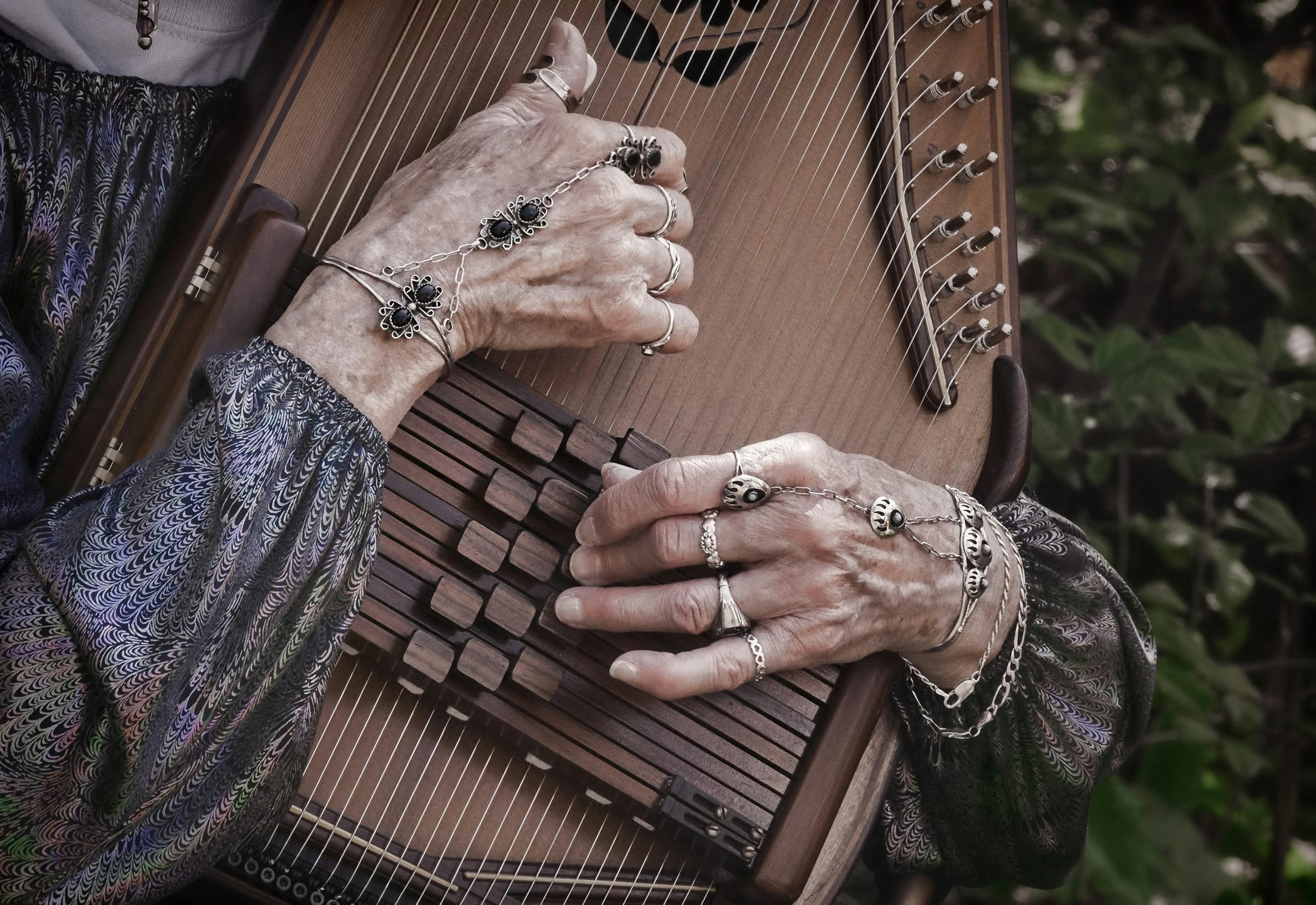
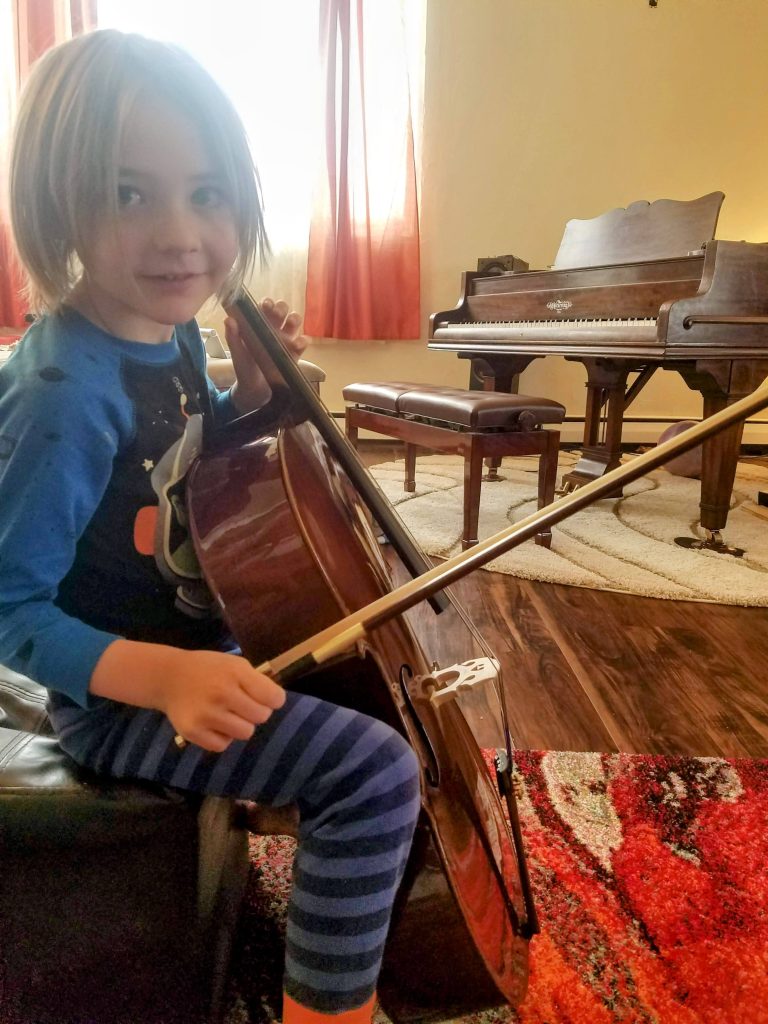
Register to Join a Session (Free)

Kindness, patience, and genuine welcome are at the heart of these sessions. Each participant is respected and encouraged, whatever their background or experience. All can explore and enjoy music at a comfortable pace, with support and a sense of safety, free from pressure or judgment. Here, music is for everyone, just as they are.

Music Community Register

Our vision is to create a reality where music learning and expression is accessible to everyone. Our sessions are open to all, and free to join. We are funded through the support of those who know why this matters – click to learn more.

Wandering the Intervals

Conjured by Chance

Dice Roll Composition Series​

In the Space Between

We often open moments in the quiet of the afternoon to explore and listen. Our children find themselves in spaces of contemplation, sunlight, and wandering within their mind and being. Today, I happened to step to the keys and roll the dice. The sequence that presented was a simple one, good for expanding the spaces between. 

They are present. They are absorbing. The shapes form. They integrate.

 - This is organic acquisition of music, fluently.

This session is unedited and exploratory. It is sensed, not thought. My fingers feel for spaces they wish to inhabit, not a form they have rehearsed.

  • The idea of this series isn’t necessarily to create fully produced material, it is to play. The dice offer their shape, the frequencies offer their cadence, and the rest just sort of shows up when we set the energy into motion.

A spontaneous conducting of my favorite type of puzzle, conceived by chance, and the roll of intent.

Waking the Moon

Conjured by Chance

Dice Roll Composition Series​

Waking the Moon

There are days and moments when one just needs an escape, even for a few moments. Often when I feel this sense pressing in, I will step away to the keys. Sometimes, the hands and mind direct the harmonic sequences in paths that offer the reframing and aligning that allows ease to return. Sometimes, the internal chaos creates a stagnation and the keys serve as nothing more than a resting place for fingers. It is in these moments I find myself most appreciative for the gift of these dice, that found a home here with us so many years ago. 

Something about taking the dice into my hands immediately generates a shift.
They offer a strange sense of comfort that only exists in the realm of not yet known.

They invite me to step back into being.

This roll is one of these instances, where the usually welcome cacophony grew into strain, and the moment I let the dice roll from my fingers, the energy began to breathe again. Maybe I’ll do something more with the roll, maybe it is complete. I’ll let the moon decide.

This session is unedited, and composed of single-take, on a piano that was tuned the week before-then the weather did its thing.

  • The idea of this series isn’t necessarily to create fully produced material, it is to play. The dice offer their shape, the frequencies offer their cadence, and the rest just sort of shows up when we set the energy into motion.

A spontaneous conducting of my favorite type of puzzle, conceived by chance, and the roll of intent.

Unbound

Conjured by Chance

Dice Roll Composition Series​

Unbound

This roll has been an intriguing one for certain. It began simple enough, and after a few iterations that offered themselves for exploration, things shifted. It decided.

A beautiful conversation was held, an idea was shared, and the frequencies were listening. Within moments, a response was known, and a space took form to hold within it, the possibility. 

When we move through life without a sense of being, we search for where we can find that which we can hold onto. Llike a tether, our ease and sense of security, can become reliant on a variety of anchors. While it feels reliable and trustworthy, the fibers of the tether determine their own tenacity.  

When our being is generated within the field in which we can expand and move, we are our own containment and our energy thrives. We are unbound, untethered, held in secure ease, and capable being. 

Unmastered, and composed of single-take tracks, this composition is spontaneous and exists in gentleness. Try headphones. It moves.

  • The idea of this series isn’t necessarily to create fully produced material, it is to play. The dice offer their shape, the frequencies offer their cadence, and the rest just sort of shows up when we set the energy into motion.

A spontaneous conducting of my favorite type of puzzle, conceived by chance, and the roll of intent.

May it hold you in serenity.

Another Day in Paradise

We had a lot of fun learning this song, exploring its framework and structure, and creating these sessions. 

The video is in 3 parts:

  • The first is us learning the song
  • The second is a close up of some fingers of mine, dancing on the keys
  • The third is open play and exploration, ideas, and some stuff to maybe ponder

    No expectations, just exploration. 
    We hope you’ll discover some pf the joy we felt, making this for you!

Why the Circle of 5ths Matters

The Circle of Fifths: An Ongoing Exploration of the Map

This is a new section on our site, requested by, and evolving dynamically in response to the interaction of those who engage in our circle building sessions.  Thanks for your patience as we build it.

You’ve probably heard that circle of fifths is a reference chart, and can function as a method and visual resource. It is all these, and it’s an ancient map woven from math, geometry, physics, and human wonder, that offers a portal constructed of connection.

The circle’s twelve-step version is a zoomed-out view of the universe of possible intervals, set into a twelve note system. We zoom out like this for ease and the sake of simplicity. Intervals are generated by multiplying or dividing frequencies, resulting in observable cyclical patterns. In this format, the circle is arranging the 12 tone chromatic scale in a sequence of perfect fifths.

The circle serves as a reference for understanding harmony, key signatures, and modulation. It is a representation of the relationships and interaction of frequencies, of the ratios that describe how sounds resonate together.

  • In its classic form, at each step we advance around the circle in an interval of 5. Starting at one position, we land at the fifth step away in the next, either ascending or descending (pitch, alpha, and numeric).
  • Defined by the frequency ratio 3:2, this 5th interval relationship is not an arbitrary invention; it’s a natural, physical phenomenon that musicians, along with scientists, philosophers, and mathematicians have recognized across cultures and time.
The image on the right, and description that follows, are from Joe Dubs & OmniCore Tech 
If you’re not familiar with Joe Dubs, take a moment to visit, it will be well worth your time.

This image unveils the profound geometric structure underlying musical harmony, revealing a sacred order woven into the fabric of sound itself.

At its core, this “Musical Geometry” diagram illustrates the harmonic relationships between fundamental intervals—the perfect octave (1:2), perfect fifth (2:3), and perfect fourth (3:4). These ratios are not arbitrary but are intrinsic to the very physics of vibration, echoing through nature, celestial mechanics, and human perception of consonance.

The circles interwoven in the central diagram reflect harmonic progression, where geometric relationships mirror the resonance of frequencies. This sacred design reflects the harmonic lattice, an ancient concept recognizing that music is not just an art but a mathematical and cosmic principle. The Fibonacci sequence, the Golden Ratio, and sacred geometry all find expression in these vibrational relationships.

For an incredibly simple and useful tool, visit Rand Scullard’s Interactive Circle

HoH | Quartz Explorations

The Secret Song of Quartz

Imagine holding a piece of quartz in your hand—the kind that glitters in Colorado creek beds or catches sun high on a mountainside. It seems still, timeless, and silent. But inside, a secret music is always playing.

The Universal Language of Vibration

Nikola Tesla’s vision of the universe as a system of vibrations resonates deeply with the principles of both quartz resonance and music. Let’s explore how these three elements interconnect, creating a harmonious tapestry of science, art, and philosophy.

Music and Harmony

Music, at its core, is the art of organizing sound waves into pleasing patterns. Different musical notes correspond to specific frequencies, and the relationships between these frequencies create harmonies. Just as a quartz crystal has a natural resonant frequency, musical instruments produce sounds based on their unique vibrational properties.

The Harmonic Convergence: Tesla, Quartz, and Music

Tesla’s Vision

Tesla believed that everything in the universe is in a state of vibration. He saw energy as a fundamental force that could be harnessed and transmitted through resonant frequencies. His experiments with wireless energy transmission and electromagnetic waves were attempts to tap into this universal language of vibration.

Quartz Resonance

Quartz crystals, with their precise piezoelectric properties, are natural translators of mechanical stress into electrical signals. When a quartz crystal vibrates at its resonant frequency (e.g., 32,768 Hz in watches), it creates a pure, stable oscillation that can be used to keep time with remarkable accuracy.

The Convergence

Frequency and Pitch

  • In music, the pitch of a note is determined by its frequency
  • A quartz crystal’s resonant frequency is its unique pitch
  • Tesla’s experiments with electromagnetic waves explored the transmission of energy at specific frequencies, much like how musical notes are transmitted through the air

Harmonics and Overtones
Musical instruments produce the fundamental frequency and harmonics and overtones. These additional frequencies create the rich, complex sound of an instrument.

Resonance and Amplification
In music, resonance occurs when an object vibrates at its natural frequency, amplifying the sound. Tesla’s work with resonant transformers and wireless energy transmission relied on the principle of resonance to amplify and transmit energy. A quartz crystal’s piezoelectric effect is a form of resonance, converting mechanical energy into electrical energy.

Resonance: A Multidisciplinary Exploration Project

“Waves of Connection”

Core Project Components
  1. Quartz Crystal Resonance Instrument
  2. Collaborative Sound/Wave Generation
  3. Interconnected Measurement Systems
  • Experimental Explorations

    Quartz Crystal Music

    Materials

    - Quartz crystal
    - Tuning fork or smartphone tone generator
    - Metal plate or glass surface
    - Fine sand or salt

    Place the quartz crystal on the metal plate or glass surface. Use the tuning fork or tone generator to produce different frequencies. Observe how the crystal responds to different frequencies. Sprinkle fine sand on the surface to visualize the geometric patterns created by the sound waves (cymatics).

    • How does the quartz crystal's response to different frequencies relate to musical harmonies?
    • Can you hear the crystal's vibration, and how does it compare to musical notes?
    • How does Tesla's concept of wireless energy transmission relate to the way sound waves travel through the air?
  • Quartz crystals are living bridges between different forms of energy - mechanical, electrical, and sound

    Sound and Vibration Experiment

    Materials

    - Quartz crystal (clear, well-formed)
    - 9-volt battery
    - LED
    - Copper wires
    - Tuning fork or smartphone with tone generator app
    - Thin metal plate or glass surface
    - Fine sand or salt

    The Experiment: Seeing Sound, Feeling Vibration

    Stage 1: Electrical Resonance
    Connect quartz to LED (as in previous experiment) and observe how physical stress creates electrical response

    Stage 2: Sound Resonance
    Place quartz on metal plate or glass surface, and using a tuning fork or tone generator, create different frequencies and observe how the crystal responds

    Different frequencies create different vibration patterns. Some frequencies will make the crystal "sing" or vibrate more intensely

    Optional Cymatics Visualization

    • Sprinkle fine sand on the surface near the crystal
    • Watch geometric patterns form as sound waves interact with the surface
  • Energetic Communication

    Harmonic Resonance Sculpture

    Materials 

      - Multiple quartz crystals of varying sizes
      - Arduino or Raspberry Pi microcontrollers
      - Piezoelectric sensors
      - Sound output devices (speakers)
      - Interactive touch interfaces

      - When we touch a quartz crystal, it generates a unique frequency

      - Crystals communicate and blend frequencies, with them, we can create a collaborative musical/sound experience

      - Visualizes how individual "waves" interact and create harmony

The Experiment: Making Quartz “Speak”

Creating a Piezoelectric Connection, we will need a clear, well-formed quartz crystal, preferably with sharp, clean edges

Step 1: Carefully tape copper wires to opposite sides of the quartz crystal

Step 2:  Connect wires to the LED and battery

Step 3: Gently squeeze or tap the crystal. The crystal will generate a tiny electrical charge when physically stressed

If we have an LED nearby, it might briefly light up

We’re literally turning mechanical energy into electrical energy!

Expanded Research 

– Quantum entanglement
– Cymatics
– Biorhythms
– Geological time scales
– Electronic music composition
– Interactive art installations

Reflections

Tesla’s vision of a universe composed of vibrations finds a tangible expression in both the precise oscillations of a quartz crystal and the harmonious patterns of music. Each note in a musical composition, each vibration of a quartz crystal, and each electromagnetic wave in Tesla’s experiments are part of the same universal symphony, a harmonious dance of energy and matter.

By exploring these connections, we gain a deeper appreciation for the interconnectedness of all things and the fundamental role that vibration plays in shaping our world. The precise ticking of a quartz watch, the resonant frequencies of a musical instrument, and the wireless transmission of energy are all part of the same vibrational tapestry.

Tesla, quartz, and music all share one fundamental principle: resonance.  

– Tesla’s experiments were built around the idea that electrical energy can be transmitted through the air when the source and receiver are tuned to the same frequency. He generated huge, high‑frequency oscillations and watched the energy “hop” from one resonant circuit to another.  

– Quartz crystals are natural resonators. When you stress them they produce an electric charge at a very precise natural frequency (≈ 32 kHz for watches). If you drive a quartz crystal with an external sound wave that matches its natural frequency, the crystal vibrates strongly. It’s just like a guitar string that sings when you pluck it at its resonant pitch.  

– Music is organized sound waves. When two notes share a simple frequency ratio (e.g., an octave, a perfect fifth), their waveforms line up periodically, creating a pleasant, reinforcing pattern. We call this harmonic resonance.  

Because all three systems rely on matching frequencies to amplify or transfer energy, the “vibration” you hear in a quartz crystal, the humming of a Tesla coil, and the chords of a musical instrument are different expressions of the same physics. They each turn a tiny, periodic motion into a larger, perceptible effect, and they all illustrate how the universe communicates through energy, frequency, and vibration.

Harmonic Resonance: The Universal Language of Vibration

Engagement 1: Visible Harmony & Resonance

Crystals, Airwaves, and the Touchless Song of the Theremin

Components

– Theremin
– Quartz crystals
– Curious kids

Imagine a quartz crystal, humming silently in your palm, and the invisible song of the theremin, floating on air when you move your hands. Both are instruments of music, of energy, frequency, and of resonance.

Quartz, has a perfectly ordered atomic lattice that vibrates at unwavering, natural frequencies. When you squeeze, tap, or sing to it, it moves and transforms your action into an electrical pulse called piezoelectricity. This is how a crystal in a radio or old phone feels the buzzing airwaves and turns them into music or messages we can hear.

Have you ever seen someone play a theremin? Underneath its haunting sound is a delicate dance happening between electric fields and radio waves. When we play the theremin, our hands interact with these fields, shifting frequency, just as a tap or squeeze changes how quartz vibrates. Even though we don’t see the dance of energy, it is and our interaction  coaxes it into resonance.

Nikola Tesla was a guy who always seemed to see connections, and he knew that both quartz and the theremin operate by the same law: energy in motion creates waves, and waves can travel, combine, and even carry music through the air or stone.

__________________________

When a theremin makes a note, internal circuits use quartz (or sometimes other oscillators) to steady the frequency, ensuring the sound is pure and unwavering.

When quartz vibrates, it “broadcasts” an electric signal, which can be tuned and mixed, resonating in radios, microphones, and in the theremin’s circuits.

Music is woven from the resonance between energy, material, and presence

When you listen to a theremin’s voice, think about the crystal quietly beating inside a radio, a clock, or the bedrock beneath your feet. Both are proof that the world itself sings.

__________________
The theremin’s earliest stable forms used quartz crystal oscillators for their pitch circuits.

Engagement 2: Quantum Entanglement Communication Prototype

Demonstrating wave propagation and connection

Components

  – Paired quartz crystal oscillators
  – Signal transmitting crystal bowls
  – Mallets and lazer lights
  – Collaboratively create resonance

Interactive Elements
 – Participants create waves through touch/input
  – Waves transmitted between paired crystal bowls
  – Visual/audio demonstration of wave transformation
  – Explores concepts of quantum communication

Engagement 3: Geological Time and Personal Rhythm Installation

Connect personal biorhythms with geological time

Components

  – Quartz crystals from Colorado
  – Biometric sensors
  – Real-time data visualization
  – Musical/sound generation system

Experience

  – Participants connect personal heart/breath rhythms
  – Rhythms translated through quartz crystal oscillators
  – Create collective “geological music”
  – Visualize interconnectedness of personal and geological time

Harmonic Resonance Exploration

Key Observation Points

– Every object has a natural frequency
– Quartz crystals can generate electricity when stressed, vibrate at specific frequencies, and transform energy between different states

Resonance as a Universal Principle

Everything vibrates:

  • Atoms
  • Molecules
  • Crystals
  • Human bodies
  • Planets
  • Entire universes

– How are musical harmonies similar to crystal vibrations?
– Can you feel the “rhythm” of the crystal?
– What happens when different frequencies meet?

Deeper Exploration

Experiment with: different crystal sizes, various sound frequencies, and multiple crystals together

Scientific Principles Demonstrated

– Piezoelectricity
– Cymatics
– Wave interference
– Energy transformation
– Resonant frequency

Writing Ideas

– Crystals as “translators” between different energy states
– Vibration as a fundamental language of connection
– Every “thing” has its own unique song

Additional Exploration

– Research quantum entanglement
– Explore sound healing practices
– Study molecular vibration in different states of matter

Educational Objectives

– Demonstrate piezoelectric principles
– Explore wave propagation
– Understand resonance
– Highlight interconnectedness
– Blend art, science, and human experience

Potential Collaborators

– Local universities (Physics, Music, Engineering departments)
– Science museums
– Electronic music composers
– Quantum physics researchers
– Geological societies

Technical Challenges

– Precise frequency measurement
– Signal translation
– Real-time collaborative interface
– Maintaining crystal integrity
– Creating meaningful visualization

Connections

– Explore how individual “waves” create collective experience
– Demonstrate interconnectedness of natural systems
– Show how tiny changes create significant transformations

Expanded Research 

– Quantum entanglement
– Cymatics
– Biorhythms
– Geological time scales
– Electronic music composition
– Interactive art installations


Quartz, Crystals, and Colorado: An Unexpected Connection

Colorado might seem far from the Parisian laboratories where the Curie brothers made their initial discoveries, but the state has a fascinating relationship with quartz that adds an intriguing layer to the story of timekeeping.

The Rocky Mountains, in Colorado, are a geological treasure trove of mineral formations, including some of the most remarkable quartz deposits in the United States. The Crystal Peak area in Teller County, located near Pikes Peak, is particularly famous for its exceptional quartz crystals. These  rocks are potential precision instruments hidden in the mountain landscape.

Colorado’s Crystal Connection

During World War II, the demand for high-quality quartz crystals skyrocketed. Radio technology and early electronic communications required precise crystal oscillators, and Colorado’s mineral deposits became strategically important. The U.S. government even established programs to collect and process quartz crystals from Colorado’s mountains, recognizing their potential for military and scientific applications.

An Unexpected Technology Hub

Colorado would later become a hub for the very technologies that quartz crystals would enable. The state’s Silicon Mountain corridor (centered around Boulder and Denver) became home to numerous electronics and technology companies that would rely on the precise oscillation properties first discovered by the Curies.

Companies like Ball Aerospace, now BAE Systems, in Boulder, have used precision crystal technologies in everything from satellite navigation systems to space exploration equipment. The very crystals that could keep a watch ticking perfectly are now helping to navigate spacecraft and collect data from the far reaches of our solar system.

The Geological Story

The quartz crystals of Colorado tell a story millions of years in the making. Formed deep underground under immense pressure and heat, they emerged from the earth’s crust as the Rocky Mountains were thrust upward. Each crystal carries within it a record of geological time.

It’s a beautiful symmetry: a rock formed by immense geological forces, shaped by human curiosity, becoming an instrument that, when pressure is applied, measures the most precise increments of human experience.

Colorado, Tesla, and Resonant Frequencies: A Vibrational History

Nikola Tesla’s Colorado Connection

In 1899, **Nikola Tesla** chose Colorado Springs as his personal laboratory, establishing a research station that would become legendary in the world of electrical science. The location wasn’t random. Colorado’s high altitude, clear atmosphere, and unique geological composition made it a perfect natural laboratory for his groundbreaking experiments in electromagnetic waves and energy transmission.

Tesla’s Colorado Springs Laboratory

– Established in 1899
– Created massive electrical discharges
– Conducted experiments in wireless energy transmission
– Produced artificial lightning up to 135 feet long
– Demonstrated wireless transmission of electrical energy

NCAR: Modern Scientific Resonance

The National Center for Atmospheric Research (NCAR) in Boulder represents a direct continuation of the scientific curiosity that drove Tesla. Located on the edge of the Rocky Mountains, NCAR sits at the intersection of geological wonder and cutting-edge scientific research.

Resonance Connections

– Studies wave propagation in atmospheric systems
– Explores vibrational patterns in natural systems
– Uses advanced sensing technologies that echo Tesla’s early work in energy transmission

Tesla’s Vibrational Philosophy

Tesla believed that everything in the universe is fundamentally a system of vibrations. His work with frequencies and energy transmission parallels our exploration of quartz crystals’ piezoelectric properties.

– Both explore energy transformation
– Both see vibration as a fundamental language of the universe
– Both demonstrate how seemingly solid matter is actually in constant motion

Thought to Take With You

Tesla once said: “If you want to find the secrets of the universe, think in terms of energy, frequency, and vibration.”

The quartz crystal in your hand, the mountains of Colorado, the atmospheric research at NCAR, and Tesla’s visionary experiments are all part of the same fundamental conversation about how energy moves, transforms, and connects.

Fluency Project | Hands on History CO | Sacred Pulse

The Soundscape of Existing

Where your unique story meets shared tradition, and every voice finds the confidence to belong

.cls-1{fill-rule:evenodd;}

Anchoring Across Time

Music Holds Community and Place

Belonging and Invitation

The Power of Reference

From the Land, to the Voice, to Each Other

In every culture, every era, music begins with an idea. The ideas form, word by word, one note at a time. An anchor is a place, or a note to come home to, a shared point of beginning and returning. In Colorado, we find the echoes of these anchoring notes from the deep chants of indigenous Ute and Arapaho, in mountain fiddle tunes, playground hum, and river song.

In this segment, we’ll explore how each of us, and each generation, can find our unique musical anchor—discovering our voice, our center, and the note from which all connection grows.

Anchoring Across Time

Pitch isn’t just a sound, it’s a sense of home, a way to find one another in music and in history.

Together, we’ll experience how indigenous flutes, pioneer fiddles, and modern voices all begin by listening, matching, and anchoring. This segment will help each participant discover the note that grounds them. They will have the opportunity to discover how finding our anchor lets us create, connect, and learn from one another.

Ute, Arapaho, and Cheyenne Anchoring Traditions

  • Ute Water Drum & Ceremony:
    • The Ute water drum is well documented as foundational in Ute ceremony, especially Bear Dance.
      • McAllester, David P. “The Bear Dance of the Ute Indians.” Ethnomusicology, vol. 7, no. 3, 1963, pp. 205–216.
      • Smithsonian NMAI (National Museum of the American Indian): Ute Bear Dance
  • Arapaho, Cheyenne Drumming and Vocal Song:
    • Heth, Charlotte. Native American Dance: Ceremonies and Social Traditions. National Museum of the American Indian, Smithsonian Institution, 1992.
    • Powers, William K. “Arapaho Music and Dance.” In Plains Indian Musical Traditions, University of Nebraska Press, 1980.
    • Mooney, James. The Cheyenne (Ethnological report). U.S. Bureau of American Ethnology, 1896.

Energy & Tesla

  • Tesla’s work in Colorado Springs focused on generating, tuning, and transmitting frequency and resonance.
  • Pitch is fundamentally a frequency, a vibration at a specific rate. Key to both music and Tesla’s wireless energy experiments, are the echoes of energy's song, generated throughout this land.

Geology/Cultural

  • Colorado’s mountainous terrain creates natural resonance chambers. Canyons, caves, even the “singing sands” of Great Sand Dunes are where “finding the pitch” takes on literal, landscape-scale meaning.
  • Indigenous flutes, Ute water drums, and the echoing calls of wildlife are examples of how pitch/local frequency reveals land and identity.

Music as Community and Place

For the indigenous peoples, just is can be for us today, music was an integral component of daily living and landscape. Music then, as it is now, is a way of knowing self, expressing gratitude, and marking the cycles of the seasons.

For many indigenous people, songs would often begin by referencing a specific sound in nature. 

Music’s ability to travel across distance and culture parallels electromagnetic waves carrying communication. Nicola Tesla understood this, and utilized this knowledge in his wireless experiments aimed to transmit voice, music, and information through energy patterns. Tesla offered a new instrument: our atmosphere.

  • Colorado’s elevation and clear air made it a site for radio and energy experimentation.
  • Natural amphitheaters (e.g., Red Rocks) act as “transmitters” of music and voice across space. This land holds sacred intersections where music, geology, and energy meet.

Arapaho Music & Community Song

Powers, William K. – “Arapaho Music and Dance” in Plains Indian Musical Traditions;
Heth, Charlotte. Native American Dance: Ceremonies and Social Traditions.

Arapaho music is closely tied to vocal tradition. These traditions are often observed in communal chants accompanied by drums and rattles.

  • Songs are considered living entities, passed from person to person; starting a song means finding and sharing a pitch, often chosen by a respected singer. Everyone joins once the reference note is found.
  • Music marks important moments: feasts, naming ceremonies, and collective prayers for health or rain.
  • The process is inherently inclusive: there are no auditions or requirements to join; all voices are needed to bring the song to life, and tuning to each other is how community grows.
  • Many songs begin with a soft, sustained anchor note, welcoming all to listen before joining, so that “belonging” starts before the first beat.

Nature as Musical Reference in Indigenous Song

  • Rehding, Alexander. “Nature and its Echoes: Songscapes of the North American Plains.” The Cambridge Companion to Music and Nature, 2021.
  • Heth, Charlotte. Native American Dance: Ceremonies and Social Traditions (Smithsonian, especially the chapter on song origins).

In Colorado, music, energy, and land weave together in countless ways

Imagine a note ringing out as pure frequency, or a rhythm tracing the patterns of river, season, and sky. Harmony is the coming together of vibrations that shape both memory and landscape.

What hidden connection unites ancient songs, Tesla’s electric experiments, mountain drum circles, and breathtaking concerts beneath Red Rocks? Perhaps this place itself whispers that to create music is to join in the living energy that moves through everything.

A Place of Being 

In Arapaho tradition, communal singing welcomed all voices and encouraged listening for unison, rather than for individual display.

The Ute Bear Dance, a springtime ceremony still celebrated today, centers around a steady rhythm and shared chant that align participants with the wider world.

Cheyenne healing songs begin with a gathering drumbeat, each voice entering as it feels ready, reinforcing music’s power to anchor, heal, and invite belonging.

Sandstone Amphitheaters and echo sites are natural gathering points, fostering music, spoken word, storytelling, and communal rituals.

As we explore musical pitch and anchoring, we draw inspiration from these indigenous practices, finding our note together, listening to the land and each other, and creating community with every sound.

In honoring these traditions, we learn about history, and participate in the living legacy of music of belonging, connection, and respect for all.

Anchoring, Belonging, and Invitation

  • Arapaho Community Singing:
    • Powers, William K. “Arapaho Music and Dance.”
  • Ute Bear Dance, Rhythm and Alignment:
    • McAllester, David P. “The Bear Dance of the Ute Indians.”
    • Interview resources and performance notes from Southern Ute Cultural Center and Museum: Bear Dance Educational Materials
  • Cheyenne Healing Songs and Communal Drumming:
    • Keeling, Richard. Music and Culture in Native America: Eastern Woodlands. 2013. Mooney, James. The Cheyenne.

Ute Music & the Bear Dance

McAllester, David P. “The Bear Dance of the Ute Indians.” Ethnomusicology, 1963.
Smithsonian/Native Knowledge 360° Bear Dance resources

The Bear Dance is a central ceremonial event among the Ute people, marking the return of spring, and the bear from hibernation.

  • The music is anchored by the water drum, which produces a deep, steady note considered to carry spiritual significance.
  • Songs are simple, repetitive, and chanted with deep meaning, often referencing the bear’s movements.
  • The start of the Bear Dance always involves finding a communal rhythm—everyone hears the drum and tunes into the group’s unified sound, echoing how families and community come together.
  • The act of “tuning in” or anchoring to the drum’s pitch signifies group alignment and emotional connection more than individual performance.

The Power of Reference

Before any melody is sung, a reference note rings out. This pitch invites us in, grounds us, and lets us belong to the music. Just as Colorado’s land and peoples have each found their own home tones, we’ll begin by tuning in, listening for our place, and learning how to set our own anchor in music and movement.

This is where personal story meets shared tradition, where every voice finds its place, and the confidence to join.

Tuning Together

 Music begins when we find a place to meet. When we discover a pitch to return to again and again, we have our orientation, a spot to dance around. It feels like just a place to be. In this segment, we learn the art of reference-finding, discovering our own sense of musical ‘home’ in the echoes of the landscape, present and past.

Vibration is the common thread: from the note of a Ute water drum, to Teslian radio waves, to a mountain echo, music and energy are two faces of the same vibrational language.

Land shapes sound, and sound reveals land.

Colorado’s topography and natural acoustics foster unique musical and communicative traditions, both human and more-than-human (birdsong, wind, thunder, and natural amphitheaters of sandstone).

  • Known internationally, Red Rocks is revered for its perfect, open-air sound quality. The curved sandstone walls reflect and amplify music, allowing performers and audiences to experience pure sound without electronic amplification.
  • The site has hosted Indigenous gatherings, community bands, world famous concerts, and collaborative musical experiments, uniting people across diverse backgrounds through shared sonic experience.
  • The relationship between the land’s structure and the music made there highlights how geology can be an active “participant” in music-making.

Music has anchored families, communities, & cultures since humanity began

Music has anchored families, communities, and cultures since humanity began. This anchoring holds deep and enduring meaning.

Long before Colorado was named and declared a state (a square on the map), indigenous peoples, including the Ute, Arapaho, Cheyenne, and others, wove music and rhythm into every gathering (just like most of us still do now). Song and drum marked the cycles of the seasons, honored the land, and laid the foundation for ceremony, storytelling, and shared memory across generations.

As settlers from diverse backgrounds arrived, music remained at the heart of community. It brought miners together around campfires, filled ranch and barn dances with energy, and echoed through towns in parlor rooms and festivals. Fiddles, banjos, brass bands, and later jazz and swing all colored Colorado’s soundscape, intertwining history in every valley and city.


If you want to find the secrets of the universe, think in terms of energy, frequency and vibration. - Nikola
Tesla

Colorado is also a place where science and music meet. In the late 1890s, Nikola Tesla established his laboratory in Colorado Springs and explored frequency, resonance, and vibration as forces shaping the world. His discoveries confirmed what Indigenous wisdom had always known: everything is connected through patterns, pulses, and waves.

Ute, Arapaho, and Cheyenne Anchoring

In what is now Colorado, music has long been central to life for the Ute, Arapaho, Cheyenne, and many other indigenous nations.

Ute musicians would gather with the beat of the water drum. Each ceremony or story began with a shared rhythm or sung note, believed to carry both personal and communal meaning.

Arapaho and Cheyenne singers would begin with a steady drumbeat or a root note from the vocal chant, calling the group into presence and unity.

Indigenous Music as Living Tradition

In every era, music has served not just as entertainment, but as an anchor and a tool for community

Within family and culture, land and cosmos, music is the keeper of memory and a force for connection at every layer.  

Fluency Project | Hands on History CO | Harmony

The Soundscape of Connecting

HARMONY: WHERE OUR STORIES MEET

.cls-1{fill-rule:evenodd;}

When Energy Dances

The Nature of Harmony

Harmony's Geometry

Tangible Creation

Entangled Resonance

Harmony calls us to risk connection, tune ourselves to what is, and welcome the serendipity of world and self becoming more through relationship.

It is the story told in every joining of waves, in every note, in every shared breath or dawning realization:
We belong, we create together, and the universe prefers connection.

Harmony in Nature and the Human Heart

  • Every culture feels it: in the beat of drums, the cadence of seasons, the circles of dance and story, and the ebb and flow of daily rituals.
  • Rhythm and harmony ground us emotionally, imprint belonging in our bodies, and thread our experience with creative possibility.
  • Indigenous ceremonies embody harmony as a vibrant relational web, honoring every unique voice and story.
  • In the land: canyons echo and amplify, sand dunes “sing,” and ringing rocks chime with the harmonic series that organizes stone and song alike.
  • Fluency in harmony is noticing both your own “note” and how you can connect with, and respond to the notes of others, whether in music or community.
  • Harmony in society is the celebration of diverse backgrounds, talents, and viewpoints. Harmony can build community, and demonstrate tangibly how contribution matters.
  • Flourishing communities practice harmony by honoring individuality within a whole, collaborating and growing through difference as creative fuel.
Harmony is the unfolding beauty that emerges when we truly listen and connect with one another

A meeting of voices, tones, and possibilities that reveals an inherent worthiness in everything.

Born from curiosity and courage, harmony is both the blessing and evidence of our being here, together. It is not simply agreement, but a dance of creation in resonance. It is where each unique note and mind finds an opportunity to connect, and the space between us becomes alive with unexpected, serendipitous meaning.

The Harmonic Sequence: Energy in Order

  • Harmony begins with the harmonic sequence: naturally occurring frequencies aligning in simple ratios.
  • This universal pattern organizes everything, creating consonance in music, coherence in matter, and order in the cosmos.
  • Wherever waves exist (sound, light, atoms, even planets), harmony emerges as their creative meeting place, and the Harmonic interaction of energy, their origin.

Harmony in Human Community

  • Harmony is the joining of voices, ideas, and hearts. It is the celebration of uniqueness in collaboration.
  • Every drum circle, choir, group ritual, and creative experiment is a living proof that diversity, when respected and attuned, creates flourishing community.
  • Collaboration, shared tradition, and innovation transform us. Each person, culture, and story bring their own resonance, and build something new, together.

Harmony in the Natural World & Geology

  • The overlapping songs of birds at dawn, the interplay of wind and water over stone, and the harmonic overtones created by rushing rivers all embody nature’s own harmonies.
  • Colorado’s Geological Harmony can be found in the layers of sandstone, ringing rocks, and naturally resonant canyons and amphitheaters. There are many geological formations across the region that demonstrate how Earth’s structure supports and amplifies harmony.

Wonder, Flourishing, and Invitation

  • Harmony is an open experiment—a call to risk connection, honor uniqueness, and build ever-evolving beauty in every relationship, space, and song.

Correlations with Harmonic Interactions

Sound/Music and Quantum Frequencies:

  • In music, harmony is built from notes (frequencies) resonating in alignment.
  • In quantum systems, stable atomic and molecular structures are only possible at specific frequencies—essentially, standing wave patterns in the “music” of the subatomic world.
  • The overtone (harmonic) series is reflected in the allowed energy levels of electrons in an atom, or in the vibration modes of molecules.
    • Reference: Thomas D. Rossing, “The Science of Sound,” 2001
  • The Theremin and Composers influenced by non-traditional harmony and “sound as ether”
    • Debussy, Ravel, Messiaen, Debussy, Saariaho, etc., often resonate with the theremin’s ability to bend pitch seamlessly, create microtonal inflections, and build immersive harmonic fields.

The Music of the Spheres

The idea that planets and stars move in harmonious ratios and patterns, producing an inaudible but orderly "music", is an ancient one. As it turns out, based on what we now understand through study and developed technology that lets us see and calculate ever more, planetary orbits and celestial resonances actually do follow mathematical ratios similar to musical intervals.

  • Astronomical Resonance: Orbital and planetary “songs,” harmony in the timing and movement of stars and moons. (NASA Space Soundscapes)
  • Tesla’s Colorado Work: Electrical resonance, wireless energy, and seeing the planet as a connected, vibrating system. (Seifer, Wizard; Carlson, Tesla: Inventor of the Electrical Age)
    • Godwin, Joscelyn. The Harmony of the Spheres: A Sourcebook of the Pythagorean Tradition in Music (1993)
    • James Jeans, Science and Music (1937)
    • NASA: The "sounds" of planets

Sacred Geometry and Harmony

  • Patterns like circles, spirals (Fibonacci, golden ratio), and polygons underlie musical scales and harmonic relationships as well as forms seen in nature.
  • Cymatics reveals the hidden geometry of sound: sand, water, and earth shaped into stars, spirals, and waves by vibration.
    • Doczi, György. The Power of Limits: Proportional Harmonies in Nature, Art, and Architecture (1981)
    • Ball, Philip. The Music Instinct (2010) – section on geometry of harmony

Circle of Fifths: Shape and Sound

The circle of fifths arranges musical keys and intervals in a geometric cycle, revealing how frequent jumps of a perfect fifth create harmony and structure in music.

  • The circle visually expresses the cyclic nature of Western tuning, with frequency intervals mapping neatly onto geometric rotations. It can, however, be modified to reflect tuning methods and scale sets of any number of cultures and mathematical sequences.
    • Toussaint, Godfried T. The Geometry of Musical Rhythm (2013)
    • Benson, Dave. Music: A Mathematical Offering (2006)

Fractals, Harmonics, and Nested Patterns

The harmonic series (overtones), and the splitting and doubling in strings and air columns, form natural fractals—self-repeating structures that echo throughout musical harmony, timbre, and chord construction.

In musical acoustics, these nested structures echo the same self-similarity found in coastlines, ferns, crystals, and galaxies.

Our practice of scientifically studying energy demonstrates that everything vibrates—atoms, cells, ecosystems, stars. Life and matter emerge from repeated patterns, and chaos transforms into beauty through resonance.

  • Rossing, Thomas D. The Science of Sound (3rd ed., 2002)
  • Mandelbrot, Benoit B. The Fractal Geometry of Nature (1982) – for mathematical background
  • Jenny, Hans. Cymatics (study of vibrational geometry in visual patterns)

The Geometric Language

Harmony emerges where ratio, geometry, and resonance converge; this is seen in nature (shells, stones, planetary orbits), music (intervals, chords, rhythms), and art (patterns, tilings).

  • The mathematics of harmony (ratios, patterns, and fractals) is seen in galaxies, snowflakes, crystal veins, and the sonic clouds of Bach, Debussy, Saariaho, Ligeti, and Oliveros, to name just a few.
    • Ball, Philip. The Music Instinct
    • Doczi, György. The Power of Limits
    • Godwin, Joscelyn. The Harmony of the Spheres
    • Benson, Dave. Music: A Mathematical Offering

The Harmonic Sequence in Mineral Structures (Colorado Region)

Crystals & Resonance:

  • Crystals are ordered, repeating lattices of atoms. Many of the minerals we find in this region are of crystalline structure.
    • For example, quartz (abundant in Colorado) vibrates at a natural resonant frequency, which is why it’s used in timekeeping and electronics.
  • These lattices form according to principles of symmetry and resonance, producing not only predictable physical properties but also characteristic sounds when struck (“singing” quartz, ringing rocks).
  • The Fibonacci sequence and the golden ratio, both related to harmonics, are seen in symmetrical crystal formations and spiral mineral patterns in Colorado’s famous geodes, ammonites, and copper/gold veinings.


Wherever pattern, proportion, and resonance are present, the geometry of harmony is at work, joining the audible and visible worlds in a universal language. We find these everywhere, we simply must choose to look.

Technology, Resonance, and Living Connection

  • Inventors like Tesla showed that resonance and frequency, through tuned harmonics, can move energy, information, and even imagination across great distances.
  • The theremin, played without touch, makes energy audible and tactile, blending art, science, and wonder in real time.
  • Modern research, from the mathematics of sound to the empathy of group song, continues to uncover harmony’s role in everything from healing to science to ecological balance.

Harmony in Matter, Life, and the Cosmos

  • In atoms, electrons form standing waves, and each element has its own harmonic “fingerprint.”
  • Mineral structures arise from repeating lattices; quartz crystals sing at resonant frequencies, and geodes spiral with the mathematics of harmony.
  • Molecules and DNA strands coil in response to patterns that minimize conflict and maximize resonance.
  • Throughout the universe, planetary orbits and star systems gravitate into harmonically related cycles, giving space itself a kind of music.
  • In quantum fields, entanglement binds particles in a mysterious, instantaneous harmony, a distance bridged through resonance.
  • Harmony reflects how diverse molecules interact in chemistry, and how multiple systems coordinate in a living organism.
  • In biology, harmony is found in the synchronization of heartbeats, breath, neural firing, and even flocking or schooling in the animal kingdom.

Astronomical Harmony: Stars, Planets, and Orbital Resonance

Celestial Music:

  • Orbital resonance is observed in the spacing and timing of planets and moons (e.g., Jupiter’s moons Io, Europa, and Ganymede are in a 1:2:4 resonance).
  • Planets and stars oscillate (“sing”) at frequencies that create complex harmonic sequences, which can be detected as vibrations. We call this astroacoustics.
  • The Pythagorean “music of the spheres" is demonstrated in modern astronomy as we measure and translate planetary and stellar frequencies.

Colorado Connection:

  • The state’s dark skies and observatories (including the Sand Dunes  and numerous Indigenous sacred sites aligned with solar/lunar cycles) provide contexts where harmonic astronomical phenomena are directly observed and felt.

The Theremin, and the Broader Harmonic/Resonance Web

Sounding the Invisible

The theremin embodies the bridge between tactile, embodied music-making and the invisible, energetic, abstracted world explored in quantum mechanics and spectral music.

  • In performance, the player and instrument are “entangled”—moving together through the field, illustrating how harmony can arise without touch, notation, or traditional constraints.
  • In recent decades, theremin festivals and workshops around the world (including in the U.S.) demonstrate how this instrument becomes a gathering point, blending science, music, and wonder for diverse audiences.
  • Composers influenced by non-traditional harmony and “sound as ether” (e.g., Debussy, Ravel, Messiaen, Saariaho) often resonate with the theremin’s ability to bend pitch seamlessly, create microtonal inflections, and build immersive harmonic fields.

Frequencies and Connection

  • Frequencies are concrete, measurable vibrations—notes, heartbeats, seismic pulses.
  • Harmony happens when those frequencies interact in patterns of constructive resonance, creating shared meaning and new realities.

Indigenous and Social Harmony

  • Ceremony & Community: Ute Bear Dance, Arapaho/ Cheyenne call-and-response, and layered drumming. This creates social harmony built on respect, resonance, and participation. (McAllester, “Bear Dance”; Cajete, Native Science; Heth, Native American Dance

The Cultural Fusion of Colorado’s musical history spans Indigenous, Hispanic, African, European, and Asian traditions, all merging into hybrid genres, creating a socially flourishing harmony.

Entanglement is Harmonization at a Distance

Just as harmonized musical notes can reinforce each other from different instruments, entangled particles are coordinated, no matter the space between them.

Some Indigenous creation stories (including in the Colorado region) describe a “web” or “network” connecting all being—an early metaphor for the real, mysterious linkage of entanglement.

  • Gregory Cajete, “Native Science: Natural Laws of Interdependence,” 2000 
  • “The Music Instinct,” Philip Ball.

Correlations with Harmonic Interactions

Frequencies are perceived as something we can measure

They are vibrations. Whether experienced as musical notes, heartbeats, seismic pulses, or light, harmony happens when those frequencies interact, and they do so naturally in patterns of least interruption.

  • Entanglement is the unseen, awe-inspiring side: invisible connections, instantaneous influence, and the magic that arises when things, people, or energies are attuned, even across great distance.
  • The recurring presence of harmony and entanglement in physics, nature, and society speaks to a deep truth: reality is fundamentally relational, patterned, and interconnected. Music works just like this.

Sound/Music and Quantum Frequencies:

  • In music, harmony is built from notes (frequencies) resonating in alignment.
  • In quantum systems, stable atomic and molecular structures are only possible at specific frequencies. They are essentially standing wave patterns in the “music” of the subatomic world.
  • The overtone (harmonic) series is reflected in the allowed energy levels of electrons in an atom, or in the vibration modes of molecules.
    • Reference: Thomas D. Rossing, “The Science of Sound,” 2001.

The Science of Resonance: Tesla and Vibration

Nikola Tesla [Colorado Springs]

Tesla’s experiments in the late 1890s explored how harmonious frequencies could generate and transmit energy wirelessly. Tesla constructed massive coils to investigate resonance. He explored how a system can vibrate at characteristic “sweet spots,” amplifying energy and sound.

His work proved that the earth itself could carry vibrations globally, and he envisioned a world “wired” with energy and information via tuned harmonic fields.

Harmony in Contemporary Science and Art

  • Entanglement & Resonance in Society: Emotional and physiological “tuning” during group song, dance, or collaboration.
  • Modern Composers:
    • Men: Bach (recursive counterpoint), Debussy (harmonic clouds), Ligeti (sonic masses), Messiaen (colored harmonies).
    • Women: Kaija Saariaho (spectral color fields), Pauline Oliveros (deep listening), Sofia Gubaidulina (spiritual microtones), Unsuk Chin (coloristic layers).

Colorado School of Mines and Vibrational Science

As a hub for research on acoustics, seismology, and material resonance, the School of Mines examines how harmony operates on scales from minerals (crystal lattice resonance) to massive seismic waves. The school 

  • How sound travels through layers of rock (echoes, ringing, resonance)
  • The mathematics of vibration in both geology and engineering
  • The intersection of natural and engineered harmonics in mining, construction, and environmental monitoring
  • School of Mines Studies, Publishings, References

The Theremin

Hands interact with electromagnetic fields and we experience music as pure resonance, a symbol of the invisible connections that shape both science and art (Glinsky, Theremin; Lydia Kavina repertoire). Its eerie, touchless sound inspires curiosity and offers a tangible understanding of frequency in atmosphere.

  • Visible Harmony & Resonance: Playing the theremin literally means controlling frequency and amplitude with your body, making abstract musical and physical principles visible and audible.
  • Scientific Exploration in Action: The instrument demonstrates electromagnetic resonance, wave behavior, and the connection between movement, energy, and sound.
  • Quantum & Cosmic Connection: The performer and the instrument are “entangled”. Small shifts/changes in interaction with one another produce immediate effects, echoing concepts like quantum entanglement, resonance, and harmony at a distance.

QUANTUM UNDERSTANDING

Harmony is the joining and resonance of frequencies. At a quantum level, particles synchronize, amplify, or cancel each other through waves, much like the interactions of musical harmony.

Quantum superposition and entanglement are mathematical forms of co-existence, parallel to the simultaneous sounding and joining of musical tones.

Composers influenced by non-traditional harmony and “sound as ether” created immersive harmonic fields. Like the theremin’s ability to bend pitch seamlessly, these composers also used microtonal inflections to offer the depth of sound they've come to be valued for. They used resonance, color, and the physics of sound to build worlds where frequencies could “collide” and cohere in unpredictable, beautiful ways. We can create something similar right here, now, together.
 

When people sing in choir or drum in circle, and hold a conversation in music together, they are not just in the same place, they become emotionally and physiologically “entangled.” Heart rates and breathing can synchronize, mirroring the principle of resonance and quantum coordinated change.

Harmony is not just an effect, but a beckoning.
It invites us into ever-evolving beauty, surprising connections, and the shared experience of awe.

Harmony is the creative joining of unique sounds, voices, frequencies, and energies, forming new beauty through resonance and interaction.

Colorado School of Mines Resources

1. Seismic Wave Propagation, Acoustics, and Material Resonance at CSM

A. Colorado School of Mines Department and Lab Resources

  • CSM Geophysics Department — Seismic and Acoustic Research Group
    • Seismic Research at Mines
    • Focuses on how sound/seismic waves travel through rock layers, using laboratory and field experiments.
  • Center for Rock Abuse (CSM)
    • About the Center
    • World-renowned for research on rock properties, including elastic, acoustic, and seismic attributes (ringing, resonance, vibration).

B. Faculty Research

Dr. Roel Snieder — W.M. Keck Distinguished Professor of Basic Exploration Science

  • Specializes in mathematical modeling of seismic waves, resonance, and wave propagation.
  • Snieder, R. (2002). “Extracting the Green’s function of attenuating heterogeneous acoustic media from uncorrelated waves.” Journal of the Acoustic Society of America, 114(5), 2823-2832.
    Abstract

Dr. David A. Benson (Affiliate Faculty, previously CSM)

  • Studies acoustic wave propagation and diffusion in porous media—relevant to both geology and engineered structures.
  • Benson, D. A., Wheatcraft, S. W., & Meerschaert, M. M. (2000). “Application of a Fractional Advection-Dispersion Equation.” Water Resources Research, 36(6), 1403–1412.
    Link

C. Material Resonance and Applied Engineering

  • Clark, J. A., Zhang, J., & Lekic, V. (2019). “Resonant Ultrasound Spectroscopy for High-Throughput Elastic Measurements of Rocks.” Geophysics, 84(3).
    Abstract
    • While not always exclusive to CSM, this technique is widely used at Mines and referenced in their graduate work.
  • Geophysical Monitoring of Environmental Problems (CSM/USGS collaboration)
    • Uses seismic/acoustic sensors for mining safety, monitoring, and environmental impact—showing the role of resonance in both natural and human systems.

D. Seismic Wave Attenuation and Natural “Ring” Phenomena

  • Mavko, G., Mukerji, T., & Dvorkin, J. (2009). “The Rock Physics Handbook.” Cambridge University Press.
    • Frequently cited by CSM faculty; covers the mathematics of vibration, resonance, echoes, and wave damping in geology and engineering.

E. Educational and Summary Texts

  • Colorado School of Mines Geophysics Department — Course Offerings:
  • Mines Magazine (CSM): “Cracking the Code: What We Hear in the Cracking of Rock” (2018)
    • Public-facing summary of applied research in acoustic resonance and the science of “rock ringers.”
    • Read here

2. Application to Natural and Engineered Harmonics

  • Wave Propagation Research at Mines:
    • Integrates field seismology (earthquake waves, ringing rocks) with laboratory material science (how crystal lattices and minerals absorb, echo, or transmit vibrational energy).
    • Use in monitoring mines, tunnels, and environmental sites for stability and resonance/damping.
  • Industry Partnerships:
    • CSM collaborates with major engineering and mining firms to apply signal processing, resonance, and acoustic monitoring for safe construction, effective resource extraction, and environmental protection.