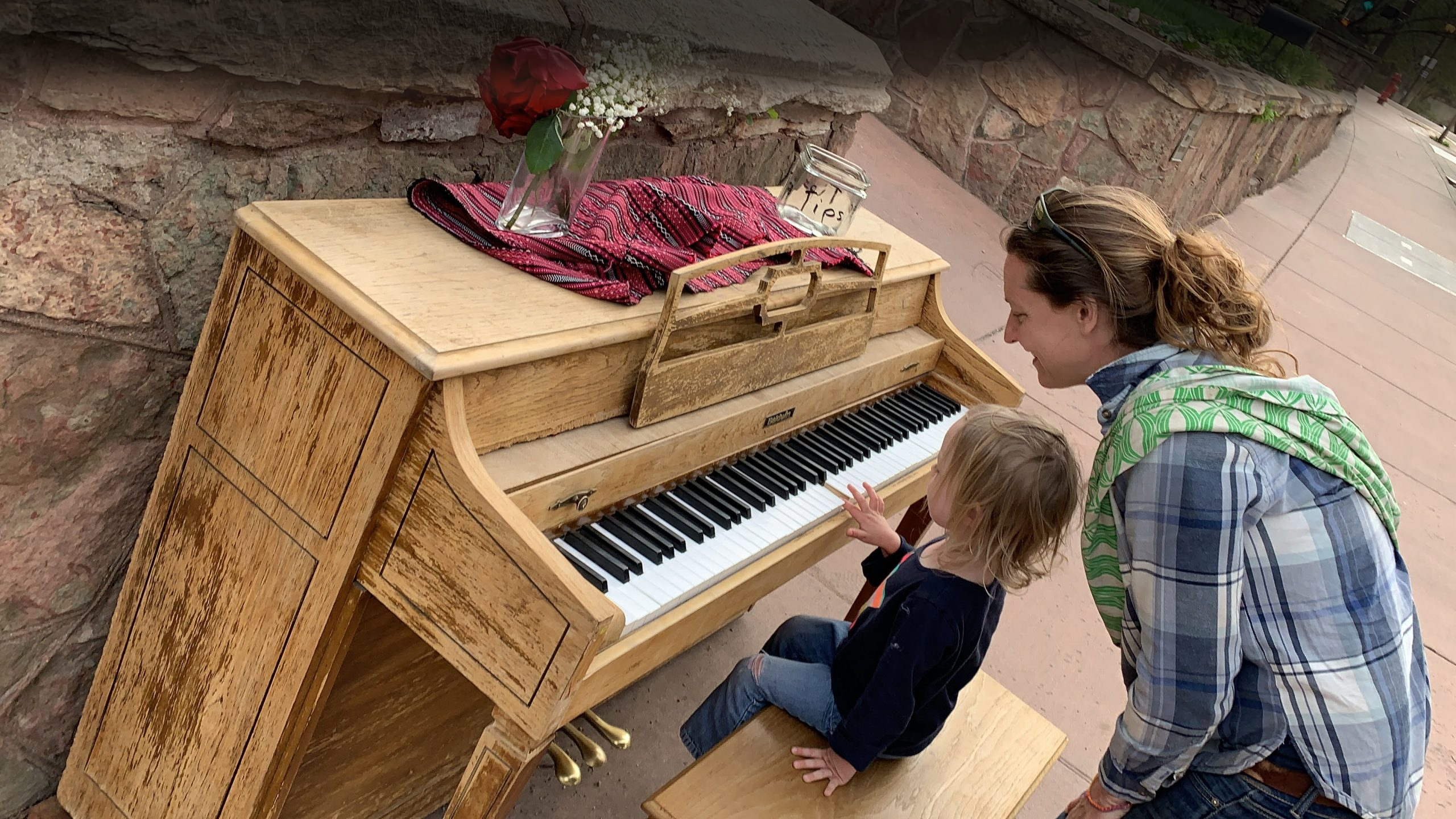
<span class="vcard">Angie</span>
Angie

Fluency in Music : Pitch & Frequency (Session Overview)

Consonance Studios – “House of Harmony: Pitch” Outline

Vibration: Our First Language of Existence

1. Invitation to Wonder

What is Vibration?
Imagine vibration as the universe’s most basic way of saying “I am here”. It’s like the very first whisper of existence, a tiny, constant movement that everything does.

How We Experience Vibration

    • “What actually is pitch?”
    • Introducing pitch as more than just high and low
    • Pitch is reference point, belonging, the essence of tuning in

Humans Experience Vibration  

  • Hearing  Sound: Vibrations our ears can detect
  • Feeling  Touch: Vibrations our skin can sense
  • Sensing  Energy: Vibrations we can’t directly see 


Pitch vs. Frequency: A Simple Breakdown

Frequency

How many times something moves back and forth in one second

  • Counting how many times a swing goes back and forth
  • Measured in “Hertz” (times per second)

 Pitch

How we hear and experience that frequency

  • The “highness” or “lowness” of a sound
  • How our brain interprets the frequency

Vibration in Everyday Life

Everything vibrates, all the time

– A guitar string
– Your voice
– The ground you stand on
– Your own body

Construct of Sound

Think of sound like a story

– Frequency is the structure
– Pitch is how we hear that story
– Rhythm is the way the story moves


2. What is Pitch?

Pitch as Reference and Relationship

    • Pitch as “where you stand in the musical landscape”
    • Pitch as anchor, the note you return to, the home of tuning and belonging
    • “Reference” vs. “absolute,” flexible vs. fixed pitch
    • How we hear and experience that frequency
    • The “highness” or “lowness” of a sound
    • How our brain interprets the frequency

3. Beyond Notes: Living Pitch

Pitch is Alive

    • Every instrument, environment, and even our own bodies generate frequency, energetic patterns that give pitch
    • Tuning is a conversation with context (weather, energy, emotion)
    • Pitch in nature: birds, wind, river
    • “Listening for the note that fits here, now, together

4. Pitch in Our Bodies

Embodied Knowing

    • Pitch is not separate from our bodies: voice, resonance, vibration
    • Larynx, chest, head, all resonate with unique pitches
    • Tuning in to self and others, inner sense of place and context

5. Culture and History: Pitch Across the World

Tradition and Context

    • Pitch is cultural: different reference notes, scales, tuning systems worldwide
    • Western A440, non-Western, Indigenous references
    • The diversity and richness of tuning and anchoring practices

6. Pitch in Community

Belonging

    • Group music relies on agreed arrival at a shared pitch and set of pitches
    • Choir, orchestra, drum circle—coming together is tuning together
    • Pitch is negotiating, listening, finding communal ground

7. Tuning as Ritual

The Practice of Attuning

    • Ritual as process, not just result
    • “Start where you are, listen, adjust”
    • Every gathering honors tuning as a moment of shared attention

8. Wonder & Experiment

Playful Invitation

    • Experiment with pitch—bend, move, shift
    • Find multiple centers, explore non-traditional reference points
    • “Pitch is playground,” not just measurement

9. Practice and Activities

Ways to Explore

    • Call-and-response
    • Tuning forks, found sounds, “singing the room”
    • Locating personal ‘home note’
    • Listening and replying, blending, matching, exploring dissonance and consonance

10. Closing Reflection & Invitation

Meaning of Pitch

    • Pitch is connection, belonging, listening, curiosity
    • Attunement is the beginning of community and story
    • Invitation to keep listening and discovering

Vibration is possibly our most fundamental connection to existence
Before we see, before we think, we feel movement

Fluency Project | HoH CO | FREQUENCY [ Resources ]

Additional Resources

Indigenous Music in Colorado & Informational Guides

Audio & Multimedia

These digital resources provide primary source audio, educator packets, video, and curated background to support the musical and historical layers of this program.

Ute Music and Bear Dance

Ute Music & the Bear Dance

McAllester, David P. “The Bear Dance of the Ute Indians.” Ethnomusicology, 1963.
Smithsonian/Native Knowledge 360° Bear Dance resources

  • The Bear Dance is a central ceremonial event among the Ute people, marking the return of spring and the bear from hibernation.
  • The music is anchored by the water drum, which produces a deep, steady note considered to carry spiritual significance.
  • Songs are simple, repetitive, and chanted with deep meaning, often referencing the bear’s movements.
  • The start of the Bear Dance always involves finding a communal rhythm—everyone hears the drum and tunes into the group’s unified sound, echoing how families and community come together.
  • The act of “tuning in” or anchoring to the drum’s pitch signifies group alignment and emotional connection more than individual performance.

Arapaho and Cheyenne Musical Traditions

Cheyenne Music & Healing Traditions

Mooney, James. The Cheyenne (Ethnological report);
Keeling, Richard. Music and Culture in Native America.

Cheyenne healing songs are traditionally used in ceremony and are anchored by a communal drumbeat or chant.

  • Each healing song begins with the group attuning themselves to the “home” pitch, often led by a medicine person or elder.
  • The process of singing together—matching pitch, echoing back, holding the rhythm—serves both as a way of tuning the group emotionally and marking a safe, sacred space.
  • Participation is based on willingness and presence, not on individual prowess: whoever is there, belongs, and is asked to add their voice.
  • These songs are intended for both personal and group healing, embedding the importance of unity, safety, and belonging in their structure.

Arapaho Music & Community Song

Powers, William K. – “Arapaho Music and Dance” in Plains Indian Musical Traditions;
Heth, Charlotte. Native American Dance: Ceremonies and Social Traditions.

  • Arapaho music is closely tied to vocal tradition—communal chants accompanied by drums and rattles.
  • Songs are considered living entities, passed from person to person; starting a song means finding and sharing a pitch, often chosen by a respected singer. Everyone joins once the reference note is found.
  • Music marks important moments: feasts, naming ceremonies, and collective prayers for health or rain.
  • The process is inherently inclusive: there are no auditions or requirements to join; all voices are needed to bring the song to life, and tuning to each other is how community grows.
  • Many songs begin with a soft, sustained anchor note—welcoming all to listen before joining, so that “belonging” starts before the first beat.


Indigenous Instrument Making in Historical Colorado: Resources

Southern Ute Cultural Center & Museum — Bear Dance Teacher Toolkit
Comprehensive guide on Bear Dance music, including water drum construction and use.
Download the PDF

Smithsonian National Museum of the American Indian (NMAI) — Bear Dance
Background on Bear Dance and water drum’s role in Ute tradition.
Bear Dance Educational Materials

Denver Art Museum — Indigenous Arts of North America: Instruments and Music
Artifact images and descriptions of regional Indigenous musical instruments.
View resource

Smithsonian Folkways — Traditional Music Instruments: Plains/Plateau
Audio, images, and descriptions of hand drums, rattles, flutes, and more.
Explore the guide

History Colorado — American Indian Teacher Resources
Activities and readings about Colorado Native music and drum making.
Teacher resources

PBS Native America — Powwow Trail: Drums and Community Music
Short video segments on traditional drum circles and music-making.
Watch segment


Common Instruments:

  • Water drums (wood, hide, water for tone)
  • Hand/frame drums (wood, hide, sinew)
  • Rattles (hide, gourd, seeds or stones)
  • Flutes/whistles (wood, river cane, bone)

Key Context:
Instrument making reflects the materials and traditions of each community. Musical craft is a living heritage, connecting people to land, ancestors, and story.


Colorado’s sandstone cliffs, canyons, and amphitheaters are not only landmarks of geological history, but living instruments—shaping and magnifying music, connecting people, and reminding us that our stories are written in both stone and sound.

Sandstone Amphitheaters: Colorado’s Natural Soundscapes

Red Rocks Amphitheatre

  • Location: Just west of Denver, outside of Morrison.
  • Geological Features:
    • The amphitheater is framed by dramatic, tilted sandstone formations—Ship Rock and Creation Rock—formed over 300 million years by geological uplift and erosion.
    • The rocks are part of the Fountain Formation, whose composition and shape allow for stunning natural acoustics.
  • Musical Association:
    • Known internationally, Red Rocks is revered for its perfect, open-air sound quality. The curved sandstone walls reflect and amplify music, allowing performers and audiences to experience pure sound without electronic amplification.
    • The site has hosted Indigenous gatherings, community bands, world-famous concerts, and collaborative musical experiments, uniting people across diverse backgrounds through shared sonic experience.
    • The relationship between the land’s structure and the music made there highlights how geology can be an active “participant” in music-making.

Other Geological Music Sites in Colorado

  • Garden of the Gods:
    • While not a venue, the towering sandstone fins and formations create unique echo patterns and have long been sites of Indigenous song and acoustic experimentation.
  • The Great Sand Dunes “Singing Sands”:
    • In certain conditions, Colorado’s sand dunes emit a low, resonant humming or booming sound when grains slide together—a natural phenomenon of granular flow, known as “singing sand.”
    • NPS: Great Sand Dunes Soundscape
  • Manitou Springs and Echo Cliffs:
    • Sites where the landscape’s natural features create echo chambers, used for signaling, music, and ceremony.

Musical Significance and Metaphor

  • Land as Instrument:
    • These places show that Colorado’s geology is not just a backdrop for human activity, but an interactive participant in music and communication.
  • Natural Amplification:
    • Indigenous peoples, early settlers, and modern musicians have all recognized and used the special acoustic properties of these spaces, emphasizing an ancient human intuition: land and music co-create experience.
  • Community Gathering:
    • Amphitheaters and echo sites are natural gathering points, fostering music, spoken word, storytelling, and communal rituals.

Further Resources


Intersections of Music, Energy, and Colorado: Resources & References

Colorado’s sandstone cliffs, canyons, and amphitheaters are not only landmarks of geological history, but living instruments—shaping and magnifying music, connecting people, and reminding us that our stories are written in both stone and sound.

  • “If you want to find the secrets of the universe, think in terms of energy, frequency and vibration.”
    Tesla, Nikola. Cited in Seifer, Marc J. Wizard: The Life and Times of Nikola Tesla: Biography of a Genius. (1998).
  • Music, physics, and the science of vibration.
    Ball, Philip. The Music Instinct: How Music Works and Why We Can’t Do Without It. Oxford University Press, 2010.

Pitch, Frequency & Landscape

  • Indigenous use of pitch and tuning, resonance in environment.
    McAllester, David P. “The Bear Dance of the Ute Indians.” Ethnomusicology, 1963.
    Southern Ute Cultural Center & Museum (Bear Dance Teacher Toolkit)
  • “Singing sand” natural resonance (Great Sand Dunes, CO):
    Haff, P. K., & Prechtel, P. E. “Singing Sand.” Scientific American, 241(2), 198-207, 1979.
    NPS Great Sand Dunes – Soundscape
  • Tesla’s work on frequency and resonance, Colorado Springs: Carlson, W. Bernard. Tesla: Inventor of the Electrical Age. Princeton University Press, 2013.

Rhythm, Pulse & Geological Cycles

  • Earth’s rhythmic processes, cyclical patterns (water, rock, atmosphere):
    National Park Service. “Rock Layers, Tree Rings, and Time.”
    NPS Geologic Time Lesson
  • Daily/seasonal cycles and Colorado weather patterns:
    Colorado Encyclopedia. “Climate of Colorado.”
    Colorado Encyclopedia: Climate
  • Ute, Arapaho, Cheyenne rhythm and drumming in ceremony:
    Heth, Charlotte. Native American Dance: Ceremonies and Social Traditions. Smithsonian, 1992.
    Denver Art Museum: Indigenous Music

Harmony, Resonance & Community

  • Sympathetic resonance in science and music:
    Rossing, Thomas D. The Science of Sound. Addison Wesley, 2001.
  • Community singing and Indigenous harmony:
    Powers, William K. “Arapaho Music and Dance.” Plains Indian Musical Traditions, 1980.
    Keeling, Richard. Music and Culture in Native America. 2013.
  • Geological resonance (ringing rocks):
    National Park Service: Ringing Rocks

Communication, Language, & Tesla


Summary/Additional

  • Native Science and the Indigenous worldview:
    Cajete, Gregory. Native Science: Natural Laws of Interdependence. Clear Light Publishers, 2000.
  • Colorado’s musical crossroads history:
    History Colorado – American Indian Teacher Resources
    Colorado Encyclopedia. “Music of the American West.”
    Music History Reference

Sandstone Amphitheaters: Colorado’s Natural Soundscapes

1. Red Rocks Amphitheatre

  • Location: Just west of Denver, outside of Morrison.
  • Geological Features:
    • The amphitheater is framed by dramatic, tilted sandstone formations—Ship Rock and Creation Rock—formed over 300 million years by geological uplift and erosion.
    • The rocks are part of the Fountain Formation, whose composition and shape allow for stunning natural acoustics.
  • Musical Association:
    • Known internationally, Red Rocks is revered for its perfect, open-air sound quality. The curved sandstone walls reflect and amplify music, allowing performers and audiences to experience pure sound without electronic amplification.
    • The site has hosted Indigenous gatherings, community bands, world-famous concerts, and collaborative musical experiments, uniting people across diverse backgrounds through shared sonic experience.
    • The relationship between the land’s structure and the music made there highlights how geology can be an active “participant” in music-making.

2. Other Geological Music Sites in Colorado

  • Garden of the Gods:
    • While not a venue, the towering sandstone fins and formations create unique echo patterns and have long been sites of Indigenous song and acoustic experimentation.
  • The Great Sand Dunes “Singing Sands”:
    • In certain conditions, Colorado’s sand dunes emit a low, resonant humming or booming sound when grains slide together—a natural phenomenon of granular flow, known as “singing sand.”
    • NPS: Great Sand Dunes Soundscape
  • Manitou Springs and Echo Cliffs:
    • Sites where the landscape’s natural features create echo chambers, used for signaling, music, and ceremony.

3. Musical Significance and Metaphor

  • Land as Instrument:
    • These places show that Colorado’s geology is not just a backdrop for human activity, but an interactive participant in music and communication.
  • Natural Amplification:
    • Indigenous peoples, early settlers, and modern musicians have all recognized and used the special acoustic properties of these spaces, emphasizing an ancient human intuition: land and music co-create experience.
  • Community Gathering:
    • Amphitheaters and echo sites are natural gathering points, fostering music, spoken word, storytelling, and communal rituals.

    •  

Further Resources

Fluency Project | Hands on History CO | Attuned Place

The Soundscape of Home

Where your unique story meets shared tradition, and every voice finds the confidence to belong

.cls-1{fill-rule:evenodd;}

Anchoring Across Time

Music Holds Community and Place

Belonging and Invitation

The Power of Reference

From the Land, to the Voice, to Each Other

In every culture, every era, music begins with an idea. The ideas form, word by word, one note at a time. An anchor is a place, or a note to come home to, a shared point of beginning and returning. In Colorado, we find the echoes of these anchoring notes from the deep chants of indigenous Ute and Arapaho, in mountain fiddle tunes, playground hum, and river song.

In this segment, we’ll explore how each of us, and each generation, can find our unique musical anchor—discovering our voice, our center, and the note from which all connection grows.

Anchoring Across Time

Pitch isn’t just a sound—it’s a sense of home, a way to find one another in music and in history.

Together, we’ll experience how indigenous flutes, pioneer fiddles, and modern voices all begin by listening, matching, and anchoring. This segment will help each participant discover the note that grounds them—and how finding our anchor lets us create, connect, and learn from one another.

Ute, Arapaho, and Cheyenne Anchoring Traditions

  • Ute Water Drum & Ceremony:
    • The Ute water drum is well documented as foundational in Ute ceremony, especially Bear Dance.
      • McAllester, David P. “The Bear Dance of the Ute Indians.” Ethnomusicology, vol. 7, no. 3, 1963, pp. 205–216.
      • Smithsonian NMAI (National Museum of the American Indian): Ute Bear Dance

  • Arapaho, Cheyenne Drumming and Vocal Song:
    • Heth, Charlotte. Native American Dance: Ceremonies and Social Traditions. National Museum of the American Indian, Smithsonian Institution, 1992.
    • Powers, William K. “Arapaho Music and Dance.” In Plains Indian Musical Traditions, University of Nebraska Press, 1980.
    • Mooney, James. The Cheyenne (Ethnological report). U.S. Bureau of American Ethnology, 1896.

Energy & Tesla

  • Tesla’s work in Colorado Springs focused on generating, tuning, and transmitting frequency and resonance.
  • Pitch is fundamentally a frequency, a vibration at a specific rate. Key to both music and Tesla’s wireless energy experiments, are the echoes of energy's song, generated throughout this land.

Geology/Cultural

  • Colorado’s mountainous terrain creates natural resonance chambers—canyons, caves, even the “singing sands” of Great Sand Dunes—where “finding the pitch” takes on literal, landscape-scale meaning.
  • Indigenous flutes, Ute water drums, and the echoing calls of wildlife are examples of how pitch/local frequency reveals land and identity.

Music as Community and Place

For the indigenous peoples, just is can be for us today, music was an integral component of daily living and landscape. Music then, as it is now, is a way of knowing self, expressing gratitude, and marking the cycles of the seasons.

For many indigenous people, songs would often begin by referencing a specific sound in nature. In the call of a meadowlark, the rush of a river, and even a new human's heartbeat, resonating within the reverence of a sacred drum, helped each participant find their own ‘reference note’, woven into the community and land.

Music’s ability to travel across distance and culture parallels electromagnetic waves carrying communication. Nicola Tesla understood this, and utilized this knowledge in his wireless experiments aimed to transmit voice, music, and information through energy patterns. Tesla offered a new instrument: our atmosphere.

  • Colorado’s elevation and clear air made it a site for radio and energy experimentation.
  • Natural amphitheaters (e.g., Red Rocks) act as “transmitters” of music and voice across space. This land holds sacred intersections where music, geology, and energy meet.

Arapaho Music & Community Song

Powers, William K. – “Arapaho Music and Dance” in Plains Indian Musical Traditions;
Heth, Charlotte. Native American Dance: Ceremonies and Social Traditions.

Arapaho music is closely tied to vocal tradition—communal chants accompanied by drums and rattles.

  • Songs are considered living entities, passed from person to person; starting a song means finding and sharing a pitch, often chosen by a respected singer. Everyone joins once the reference note is found.
  • Music marks important moments: feasts, naming ceremonies, and collective prayers for health or rain.
  • The process is inherently inclusive: there are no auditions or requirements to join; all voices are needed to bring the song to life, and tuning to each other is how community grows.
  • Many songs begin with a soft, sustained anchor note, welcoming all to listen before joining, so that “belonging” starts before the first beat.

Nature as Musical Reference in Indigenous Song

  • Rehding, Alexander. “Nature and its Echoes: Songscapes of the North American Plains.” The Cambridge Companion to Music and Nature, 2021.
  • Heth, Charlotte. Native American Dance: Ceremonies and Social Traditions (Smithsonian, especially the chapter on song origins).


In Colorado, music, energy, and land weave together in countless ways

Imagine a note ringing out as pure frequency, or a rhythm tracing the patterns of river, season, and sky. Harmony here is not just music, but the coming together of vibrations that shape both memory and landscape.

What hidden connection unites ancient songs, Tesla’s electric experiments, mountain drum circles, and breathtaking concerts beneath Red Rocks? Perhaps this place itself whispers that to create music is to join in the living energy that moves through everything.

A Place of Being 

In Arapaho tradition, communal singing welcomed all voices and encouraged listening for unison, rather than for individual display.

The Ute Bear Dance, a springtime ceremony still celebrated today, centers around a steady rhythm and shared chant that align participants with the wider world.

Cheyenne healing songs begin with a gathering drumbeat, each voice entering as it feels ready, reinforcing music’s power to anchor, heal, and invite belonging.

Sandstone Amphitheaters and echo sites are natural gathering points, fostering music, spoken word, storytelling, and communal rituals.

As we explore musical pitch and anchoring, we draw inspiration from these indigenous practices, finding our note together, listening to the land and each other, and creating community with every sound.

In honoring these traditions, we learn about history, and participate in the living legacy of music of belonging, connection, and respect for all.

Anchoring, Belonging, and Invitation

  • Arapaho Community Singing:
    • Powers, William K. “Arapaho Music and Dance.”
  • Ute Bear Dance, Rhythm and Alignment:
    • McAllester, David P. “The Bear Dance of the Ute Indians.”
    • Interview resources and performance notes from Southern Ute Cultural Center and Museum: Bear Dance Educational Materials
  • Cheyenne Healing Songs and Communal Drumming:
    • Keeling, Richard. Music and Culture in Native America: Eastern Woodlands. 2013. Mooney, James. The Cheyenne.

Ute Music & the Bear Dance

McAllester, David P. “The Bear Dance of the Ute Indians.” Ethnomusicology, 1963.
Smithsonian/Native Knowledge 360° Bear Dance resources

The Bear Dance is a central ceremonial event among the Ute people, marking the return of spring, and the bear from hibernation.

  • The music is anchored by the water drum, which produces a deep, steady note considered to carry spiritual significance.
  • Songs are simple, repetitive, and chanted with deep meaning, often referencing the bear’s movements.
  • The start of the Bear Dance always involves finding a communal rhythm—everyone hears the drum and tunes into the group’s unified sound, echoing how families and community come together.
  • The act of “tuning in” or anchoring to the drum’s pitch signifies group alignment and emotional connection more than individual performance.

The Power of Reference

Before any melody is sung, a reference note rings out—a pitch that invites us in, grounds us, and lets us belong to the music. Just as Colorado’s land and peoples have each found their own home tones, we’ll begin by tuning in, listening for our place, and learning how to set our own anchor in music and movement.

This is where personal story meets shared tradition—where every voice finds its place, and the confidence to join.

Tuning Together

 Music begins when we find a place to meet—a pitch to return to again and again. In this segment, we learn the art of reference-finding, discovering our own sense of musical ‘home’ in the echoes of the landscape, present and past.

Vibration is the common thread: from the note of a Ute water drum, to Teslian radio waves, to a mountain echo, music and energy are two faces of the same vibrational language.

Land shapes sound, and sound reveals land.

Colorado’s topography and natural acoustics foster unique musical and communicative traditions, both human and more-than-human (birdsong, wind, thunder, and natural amphitheaters of sandstone).

  • Known internationally, Red Rocks is revered for its perfect, open-air sound quality. The curved sandstone walls reflect and amplify music, allowing performers and audiences to experience pure sound without electronic amplification.
  • The site has hosted Indigenous gatherings, community bands, world famous concerts, and collaborative musical experiments, uniting people across diverse backgrounds through shared sonic experience.
  • The relationship between the land’s structure and the music made there highlights how geology can be an active “participant” in music-making.

Music has anchored families, communities, & cultures since humanity began

Whether a drum in the plains, a bell in a mining camp, or a singer’s breath at dawn, we choose to listen, to recognize, and to interact. Music has anchored families, communities, and cultures since humanity began. In Colorado, this anchoring holds deep and enduring meaning.

Long before statehood, indigenous peoples, including the Ute, Arapaho, Cheyenne, and others, wove music and rhythm into every gathering. Song and drum marked the cycles of the seasons, honored the land, and laid the foundation for ceremony, storytelling, and shared memory across generations.

As settlers from diverse backgrounds arrived, music remained at the heart of community. It brought miners together around campfires, filled ranch and barn dances with energy, and echoed through towns in parlor rooms and festivals. Fiddles, banjos, brass bands, and later jazz and swing all colored Colorado’s soundscape, intertwining history in every valley and city.


If you want to find the secrets of the universe, think in terms of energy, frequency and vibration. - Nikola
Tesla


Colorado is also a place where science and music meet. In the late 1890s, Nikola Tesla established his laboratory in Colorado Springs and explored frequency, resonance, and vibration as forces shaping the world. His discoveries confirmed what Indigenous wisdom had always known—that everything is connected through patterns, pulses, and waves.

Ute, Arapaho, and Cheyenne Anchoring

In what is now Colorado, music has long been central to life for the Ute, Arapaho, Cheyenne, and many other indigenous nations.

Ute musicians would gather with the beat of the water drum—each ceremony or story beginning with a shared rhythm or sung note, believed to carry both personal and communal meaning.

Arapaho and Cheyenne singers would begin with a steady drumbeat or a root note from the vocal chant, calling the group into presence and unity.

Indigenous Music as Living Tradition

In every era, music has served not just as entertainment, but as an anchor and a tool for community

Within family and culture, land and cosmos, music is the keeper of memory and a force for connection at every layer.  

Music & Movement, in Fluency | Hands on History Colorado & TCP

Our Stories, In Sound

Harmonizing Heritage: Exploring the Intersection of Music, Culture, and Possibility

INTEGRATING HISTORY, PHYSICS, MATH, ARTISTRY, LITERACY, COMPOSITION & CREATIVE DESIGN WITH SOUND, USING THE LANGUAGE OF MUSIC

PITCH

RHYTHM

HARMONY

COMMUNICATING

SOMATIC INTELLIGENCE

COGNITIVE DEVELOPMENT

EMOTIONAL EXPRESSION

COOPERATIVE GROUP ENGAGEMENT

Music is humanity’s oldest and most universal language—felt before words, shared across cultures, and alive in each of us. It begins as a pulse of being, grown within the courage to join in, and flourishes in harmonic connection, where beauty and wonder emerge from our diversity, weaving our shared storysong

MUSIC AND MOVEMENT

FREQUENCY

MUSIC, LIKE A STORY, LIVES IN THE SPACE OF SHARED EXPERIENCE

Before any melody is sung, a reference note—a pitch—rings out. It invites us in, grounds us, and gives us an opportunity to belong. When we begin with listening, we become aware of our shared landscape.

Pitch is so much more than sound; it is an architect of connection. It offers us a sense of home, and a way to find one another, both in music and in life. 

By listening, moving, and experimenting together, we’ll discover how every culture, and every person, can tune in, belong, and create in new ways.

Together, we will discover how finding our anchor lets us create, connect, and carry forward the song of those who came before us.

listenstory

PULSE

THE DANCE OF EXISTENCE

To make music is to join the energy of everything.

When we find our shared rhythm, we create, connect, and become part of the ongoing story of life itself.

Before we are even born, we know rhythm. The first sound we sense is the beat of the heart. This steady rhythm is our original anchor; it comforts, orients, and connects us, imprinting our earliest sense of belonging and safety.

At its core, rhythm is energy in motion. 

Throughout history and across cultures, rhythm grounds us, echoing in ceremony, the patterns of daily life, and the cycles of nature itself.

To discover rhythm is to remember: you are not separate from the world. The same waves that pulse in your chest also organize the cosmos, your mind, and our communities.

Rhythm is the language of existence, inviting all join the dance.

marek-piwnicki-rtLJjUB0nbc-unsplash

HARMONY

COMPANIONSHIP & CONNECTION

Born of curiosity and joined in courage, harmony is both the blessing and evidence of our being here, together.

Beyond simple agreement, harmony is a dance of worthiness, resonating with each unique note as it finds belonging in the space between, connecting us.

From ancient ceremonies to the wild experiments of modern music, harmony calls us to listen deeper, risk connection, and discover the wonder that unfolds when our stories intertwine.

In every culture and every landscape, harmony teaches us that worth and meaning multiply in the brave joining of worlds.

Harmony is the sacred experiment of connection.

arthur-poulin-NhU0nUR7920-unsplash

COMMUNICATION

A SHARED LANGUAGE OF BEING

Music is our original language—older than words, ever new in each voice.

Music is our first knowing: beginning with a single note of belonging, and a pulse felt before memory, we bloom into harmony where each of our stories, cultures, and emotions can be held and celebrated.

Music is a living conversation, a place to play and to understand, to find awe, and to create meaning together. It is technology, memory, medicine, and invitation. It is evidence of our worth and our capacity for connection.

We invite you to embrace the language you were born knowing: to listen, move, experiment, and add your voice to the ongoing song. Here, music is communion, not perfection; heritage, not competition. Every voice matters, and every expression belongs.

Come be part of the unfolding storysong. Where music unites past and future, knowledge and feeling, self and community. Here, the music welcomes us all.

vitaly-gariev-R05oxl9PjxM-unsplash

The song, sung by the land, by history, and by all of us, awaits your story

Online Fluency Sessions

Monthly Free Online Group Fluency Sessions

Online Individual Fluency Sessions

We invite you to join our free online group sessions, every first Wednesday of the month at 7pm MDT / -6 UTC! 
Sessions are supported through the generous contribution of interested participants and enrichment organizations. 

Individual Fluency Session are also available at our standard rate

Music Fluency Sessions

embodied

ExplorING the relationship between music, cognition, and the body.

Music is often perceived as an abstract, purely mental phenomenon, yet music is actually simply physics perceived in what we call sound (vibrations in motion, in atmosphere). 

  • Embodied Music Cognition is an interdisciplinary approach that views musical experience as fundamentally rooted in bodily perception and interaction, emphasizing how our physical bodies actively shape our musical understanding and experience.
  • Traditional views of music cognition typically focus on the brain as the primary site of musical processing.
Experiencing music as humans do, requires mind and body, space and time, matter and form, as well as the absence of each.

Music perception and cognition are not solely located in the brain; music is energy’s voice, and awareness and the experience of it is distributed throughout the body and shaped by sensorimotor function.

 
 Embodied Music Cognition: When Music Is Being, not Doing

Accordion Style 4

Accordion Title 1

Some title here

Lorem Ipsum is simply dummy text of the printing and typesetting industry. Lorem Ipsum has been the industry's standard dummy text ever since the 1500s, when an unknown printer took a galley of type and scrambled it to make a type specimen book.


Warning: Trying to access array offset on false in /home/consonance/www/www/wp-content/plugins/exclusive-addons-for-elementor/elements/accordion/accordion.php on line 1290

Accordion Title 2

Some title here

Lorem Ipsum is simply dummy text of the printing and typesetting industry. Lorem Ipsum has been the industry's standard dummy text ever since the 1500s, when an unknown printer took a galley of type and scrambled it to make a type specimen book.


Warning: Trying to access array offset on false in /home/consonance/www/www/wp-content/plugins/exclusive-addons-for-elementor/elements/accordion/accordion.php on line 1290

Accordion Title 3

Some title here

Lorem Ipsum is simply dummy text of the printing and typesetting industry. Lorem Ipsum has been the industry's standard dummy text ever since the 1500s, when an unknown printer took a galley of type and scrambled it to make a type specimen book.

2387460.jpg


Some key concepts in embodied music cognition include:

  • Embodied action: The idea that musical actions, such as playing an instrument or dancing, are fundamental to music cognition and shape our perception of music.
  • Sensorimotor integration: The integration of sensory information from the environment and motor information from the body to create a unified experience of music.
  • Enactivism: The idea that cognition emerges from the dynamic interaction between the organism and its environment.

Research in embodied music cognition has led to a range of interesting findings, including:

  • Musical expertise: Studies have shown that musicians’ bodily experiences, such as finger placement and movement, influence their musical perception and performance.
  • Emotion and expression: Research has found that bodily expressions, such as facial expressions and posture, play a crucial role in conveying and perceiving emotions in music.
  • Music and movement: Studies have demonstrated that movement and music are closely linked, with movement influencing musical perception and vice versa.

Embodied music cognition has implications for music education, performance, and therapy. For example, it suggests that music education should focus on developing bodily skills, such as movement and gesture, in addition to traditional musical skills.

Some potential applications of embodied music cognition include:

  • Music therapy: Embodied music cognition approaches can be used to develop more effective music therapy interventions that incorporate bodily experiences.
  • Music performance: Understanding the role of bodily experiences in music performance can inform the development of new performance techniques and technologies.
  • Music education: Embodied music cognition can inform the development of more holistic music education approaches that integrate bodily experiences with traditional musical skills.

Embodied music cognition offers a new perspective on the complex relationships between music, cognition, and the body, with implications for a range of fields, from music education and performance to therapy and neuroscience.


1. Sensorimotor Integration

Embodied music cognition highlights the importance of sensorimotor experiences in musical understanding. For example, the physical act of playing an instrument or dancing to music can enhance our cognitive and emotional engagement with the music.

2. Emotion and Affect

Music has a profound impact on our emotions. Embodied approaches suggest that our bodily responses to music, such as changes in heart rate, breathing, and movement, are integral to how we experience and interpret musical emotions.

3. Cultural and Social Contexts

Music is often experienced in social and cultural contexts, which can shape our embodied responses. For instance, the way we move or feel during a concert or a dance performance is influenced by the social norms and cultural practices of the community.

4. Neuroscience and Psychology

Research in neuroscience and psychology has shown that listening to music activates various brain regions associated with motor control, emotion, and memory. This supports the idea that music cognition is deeply rooted in our bodily experiences.

5. Musical Training and Expertise

Musicians often have heightened bodily awareness and control, which can influence their musical cognition. For example, a pianist’s finger movements and a dancer’s bodily expressions are closely tied to their musical understanding and performance.

6. Technology and Embodied Music

Technological advancements, such as virtual reality and motion-sensing devices, are being used to create immersive musical experiences that engage the body in new ways. These technologies can enhance our understanding of how the body interacts with music.

7. Applications in Education and Therapy

Embodied music cognition has practical applications in education and therapy. For instance, music education programs that incorporate movement and physical engagement can enhance learning outcomes. Similarly, music therapy often uses embodied practices to help individuals with physical and mental health issues.

Example: Embodied Music Cognition in a Dance Performance

Consider a dance performance where the dancers move in sync with the music. The dancers’ bodily movements are not just a response to the music but are integral to the musical experience. The audience’s perception of the music is also influenced by the dancers’ movements, creating a feedback loop between the body and the mind.

Example: Embodied Music Cognition in a Music Therapy Session

In a music therapy session, a therapist might use rhythmic drumming to help a client with anxiety. The physical act of drumming can help the client regulate their breathing and heart rate, providing a calming effect. The therapist might also encourage the client to move their body in response to the music, further enhancing the therapeutic benefits.

Example: Embodied Music Cognition in a Virtual Reality Experience

A virtual reality music experience might allow users to interact with musical elements in a 3D environment. For example, users could reach out and “touch” virtual instruments, triggering sounds and visual effects. This immersive experience engages the body in a way that traditional music listening does not, providing a deeper understanding of the music.

Conclusion

Embodied music cognition offers a rich and nuanced understanding of how we experience and interact with music. By recognizing the role of the body in musical cognition, we can gain insights into the emotional, social, and cultural dimensions of music. This interdisciplinary approach has the potential to enhance our appreciation of music and its impact on our lives.

 
.

Claude Haiku 3.5

I’ll explore the fascinating field of embodied music cognition for you, breaking down its key concepts and significance.

Embodied Music Cognition: A Comprehensive Overview

Core Concept

Embodied music cognition is an interdisciplinary approach that views musical experience as fundamentally rooted in bodily perception and interaction. Unlike traditional cognitive theories that treat music as an abstract, purely mental phenomenon, this perspective emphasizes how our physical bodies actively shape our musical understanding and experience.

Key Characteristics

Aspect Description Significance
Physical Engagement Music perception involves full-body motor, sensory, and neural processes Challenges traditional cognitive models of music processing
Sensorimotor Coupling Musical understanding emerges through bodily movements and physical interactions Explains why rhythm, dance, and movement are intrinsic to musical experience
Neurological Basis Brain regions responsible for motor control and movement are deeply involved in music perception Demonstrates the interconnected nature of bodily and musical cognition

Theoretical Foundations

The embodied music cognition approach draws from several interdisciplinary sources:

  • Cognitive science
  • Neuroscience
  • Phenomenology
  • Anthropology
  • Performance studies

Practical Implications

This theoretical framework has significant implications for understanding:

  • Musical learning and education
  • Performance practices
  • Therapeutic interventions
  • Cross-cultural musical experiences

Research Perspectives

Researchers in embodied music cognition investigate how:

  • Physical gestures influence musical interpretation
  • Body movements correlate with musical perception
  • Motor systems are activated during music listening
  • Emotional responses to music are mediated through bodily experiences

Interdisciplinary Connections

Embodied music cognition bridges multiple disciplines, challenging traditional boundaries between:

  • Cognitive psychology
  • Musicology
  • Neuroscience
  • Phenomenology
  • Performance studies

By emphasizing the body’s active role in musical experience, this approach provides a more holistic understanding of how humans create, perceive, and interact with music. Would you like me to elaborate on any specific aspect of embodied music cognition? I’m happy to dive deeper into its theoretical foundations, research methodologies, or practical applications.

Shifting Music’s Paradigm | Trauma

Why It Matters...

The architecture of uniformity and expectation that humans have imposed upon music is not, and has never been, music’s intent.

Common experiences in musical wounding

The Landscape of Musical Trauma

What messages (spoken or unspoken) might you have internalized?

For many, music has been taught as performance, as something for which one must earn approval. This conditioning is the result of generations of misunderstanding about what music really is at its core: a language, a birthright, an open invitation.

Imagine if, as children, we were told music is your breath, your story, your right, not something reserved for the ‘talented.’
What would change in our families, schools, cultures if everyone could use music to connect, to soothe, to celebrate, to be known?

  • Shame
  • Conditional Belonging
  • Anxiety & Bodily Tension
  • Gatekeeping & Stratification
  • Failed Collaboration/Connection
  • Loss of Joy

The idea of a mistake: Recitals, auditions, or group play where “getting it wrong” feels possible. In place of a safe, supportive experience,  is one of admonishment, transaction, or withdrawal of approval.

  • “When I fumbled a note at the recital, I was mortified. My teacher’s face turned stony. I wanted to disappear.”

DECENTRALIZING MASTERY | Celebrate the experience, not just the result
Fluency isn't perfection, it’s ease, play, and the joy that comes from releasing judgment's presence

Feeling valued only if one performs at a certain level, or succeeds at pleasing the one assessing; appreciation and validation tied directly to achievement.

  • “At home, if I didn’t practice perfectly, the praise disappeared. Music became a measurement, not a gift.”

__________________

If music had always been a language of belonging for you, how would your story be different?

Can we create change for you? For the next generation?

Years of associating music with physical stress: tightness, shallow breath, nausea before performances or lessons, requirement, external approval

  • “Violin lessons meant a pit in my stomach, sweaty hands, and counting down the minutes to escape.”

If, as you play, you feel awkward, small, or caught in self-doubt, that is evidence of programming, not of your capacity. The discomfort is a threshold, of perhaps multiple passageways, where freedom and ease can be found by stepping through.

 “Violin lessons meant a pit in my stomach, sweaty hands, and counting down the minutes to escape.”Being told directly or by implication, “You’re not talented enough; you can’t join,” or “You’re not a musician, just someone who plays.”

  • “Our teacher made us audition every year. I never got in. Eventually, I stopped trying altogether—convinced I wasn’t ‘real.’”

You have permission to be musical.

You do not need to earn your place in the world of sound, any more than you needed to earn the right to speak.

Disconnection

The experience of an instructor who didn’t choose to, or perhaps didn't know how to listen, who controlled the musical experience, who ignored creativity in favor of strict technique... disconnection and a sense of not mattering as a musical being is a common result.

  • “She wouldn’t let me improvise, or veer from the book. When I tried, I was corrected or ignored.”
  • “I wanted to play my song, but there was only one right way. I stopped bringing ideas.”
 

Music becoming solely about work, discipline, or appeasing authority, with original delight choked out by routine or aspiration.

  • “As an adult, I’m terrified to sing in public, even if I'm alone in my car. I have too many memories of criticism.”

_____________

If you experienced repeated correction, criticism, or exclusion, did it change your relationship with music?

The truth is, musicianship lives inside everyone, not just the few who pass a test, or fit a mold. The Fluency Project invites you to reclaim music as humanity’s language, and to rediscover expression as a right, not a privilege. Even if you feel at the edge now, you are invited in.

We are all connected by a common thread, and when we come together, we create a tapestry that resonates with beauty and harmonic wonder.

What offering could you make in music that expects nothing and simply cherishes the echo of presence returned?

Dismantling Anxiety – Processing

Performance Anxiety Processing

Systematic Deconstruction Protocol

Layer 1: Awareness

Identifying Performance Anxiety Roots
- Explore origin stories of musical fear
- Mapping personal musical trauma
- Questioning internalized performance narratives

Layer 2: Physiological Response

- Track bodily reactions during musical performance
- Develop breathing techniques
- Create grounding mechanisms

Layer 3: Cognitive Reframing

Transforming Performance Perception
- Redefine "performance" as communication
- Remove judgment frameworks
- Celebrate musical vulnerability

Trust-Building Questions for Musical Sharing

Narrative Exploration Prompts

1. Childhood Musical Memories
- What was your first musical experience?
- How did early musical interactions shape you?
- What emotions emerge when you remember those moments?

2. Musical Vulnerability Inquiry
- When do you feel most/least musically authentic?
- What prevents you from fully expressing musically?
- What would musical freedom look like for you?

3. Constraint Identification
- What internal rules limit your musical expression?
- Where did these rules originate?
- How might releasing these constraints feel?

Internalized Musical Constraint Release

Exploration Techniques

- Narrative Deconstruction
- Map personal musical belief systems
- Challenge restrictive musical narratives
- Create alternative musical stories

- Somatic Release Protocols
- Use movement
- Employ sound healing techniques
- Create ritualistic musical experiences

By recognizing music as a fundamental aspect of the human experience, we can emphasize the importance of intuitive and organic engagement with it, rather than focusing solely on technical proficiency or intellectual understanding. Through curiosity, and in a non-transactive space, we encourage an immersive and experiential approach to developing one’s own dance with music.

In an organic, immersive space, where one is securely able to explore and express, we can develop a deeper, more instinctual connection with music, allowing us to tap into its emotional and expressive potential.

Designing Micro-Steps & Invitation Rituals for Musical Wonder

1. The “One Note” Ritual

  • Begin every session (teaching, jamming, collaborating) with: “find just one note that feels alive right now. No context, no right or wrong, just explore.”
  • Let the “note” be lingered on, repeated, explored. Show the beauty in one simple sound.

2. Playful Echo/Imitation Game

  • Offer a short, spontaneous phrase. No pressure for harmony or technical skill.
  • Invite the other person to echo or respond in their own way, as they wish. Responses can be spoken, sung, instrumented, modulated, or even just by tapping or moving.
  • Focus on celebration: “What did you notice? What did you like about your version?”

3. Shared Listening/Feeling Moment

  • Play a brief sound, chord, or piece.
  • Together, take 15 seconds to each name or write one word or feeling the sound gives.
  • Affirm that all responses are valid
  • Build a vocabulary of sensation and permission

4. Curiosity Sparks

  • Before working on any technique or piece, ask:
    “If you could make any sound with this instrument, what would you try, no matter how ‘weird’ or unfamiliar?”
  • Experiment together with unconventional sounds, using humor and curiosity.

5. Permission to Not-Know

  • Establish a norm that “not knowing” or “playing a weird note” is not only allowed, but the most creative space.
  • Share a quick story (personal or famous) about a musical “mistake” that led to a new discovery, and positive outcome.
  • Invite the learner to show you their meandering sounds.

6. Micro-Composition/Improvisation Invitations

  • “Let’s invent a two-note song together, or separately. What story can it tell?”
  • Repeat with three, then four notes, gradually building comfort with creative risks.
  • Finish by affirming the beauty of each “micro-composition”. Each a story, however simple.

7. Celebration Ritual

  • End every session, regardless of what was accomplished, with: “Name one thing you’re curious about or proud of from today.”
  • Voice your own, demonstrating that growth and joy are ongoing, not fixed outcomes.

8. Color/Sensation Association

  • Play or listen to a short piece together, and ask: “What color, texture, or temperature does this sound feel like to you?”
  • Listen for wild answers and affirm. Music is much beyond notes and rules.

9. “Musical Postcard”

  • Invite learners to create or record a tiny piece (10 seconds) that “sends a mood” to a friend or past self.
  • Share with each other or simply savor privately. Frame it: “Each musical message counts; it doesn’t have to go anywhere big.”

10. Sound Hunt

  • Pick an object or environment and make music from the sounds it creates (keys, bottles, feet shuffling).
  • Build curiosity and permission by asking, “Can we make music with what’s here and now?”

11. Mood Shifting Routine

  • Choose one emotion: joy, longing, restlessness, etc.
  • Explore how one instrument or the body can express it with as little technical demand as possible (a hum, two notes, a rhythm).
  • Celebrate expressiveness and communication, not mastery and presentation.

12. “Mis…Retake of the Day” Spotlight

  • Start by making a deliberate mistake and laughing about it, modeling lightness.
  • Encourage others to try to create something they wish to then create a retake/reattempt with.

13. Partner Game, Reverse Leader

  • The learner chooses one note or phrase; build music around their seed. Play with it, allow gratitude and curiosity to lead the exploration.

14. Dedicated “Wonder Minute”

  • Reserve one minute each session to do something totally new. Exotic tuning, toy instrument, playing with eyes closed, inventing a rhythm from steps….the only rule: enjoy.

15. “Music as Landscape” Visualization

  • While playing, invite the other(s) to close eyes and describe what internal or imagined landscape the music evokes—forest, city, coastline, memory, dream.
  • Affirm: there are no wrong “scenes;” every evocation is one’s own valid response to sound/input/experience.

Tangible Music

Learning to Speak Music Through Action

Concept

Kinesthetic music learning involves exploring music through physical activities and hands-on experiences, helping learners develop a deeper understanding and retention of musical concepts

Bringing the music into the body connects the rhythmic and tonal flavors of music into a coordinated understanding

  • Movement-based learning: We learn by moving our bodies in response to sound (clapping, dancing, generating sound with the body)
  • Instrumental exploration: We experiment with a multitude of instruments, developing understanding and function through direct experience.
  • Action-connected literacy: Connecting written music  with physical actions or movements.
  • Improvisation and composition: Kinesthetic learning opens opportunity and inspiration in us to create our own music, fostering creativity and self-expression.
  • Multi-sensory integration: This approach combines visual, auditory, and kinesthetic learning, offering an opportunity for everyone to engage in their own unique ways.
  1. Physical Movement:
    • Body Percussion: Using body parts to create rhythms and sounds (e.g., clapping, stomping, snapping).
    • Dance and Gestures: Incorporating dance movements and gestures to reinforce musical patterns and structures.
    • Instrument & Object Play: Engaging with musical instruments and everyday objects to feel the vibrations and understand the mechanics of sound production.
  2. Hands-On Activities:

    • Conducting: Learning to conduct music helps students understand tempo, dynamics, and phrasing.
    • Composition: Creating music through physical manipulation of notes and rhythms, AKA, speaking in Music.
    • Improvisation: Encouraging spontaneous musical expression through movement and sound.
  3. Sensory Engagement:

    • Tactile Learning: Using tactile materials like rhythm sticks, maracas, and other percussion instruments to feel the music.
    • Auditory Feedback: Listening to the sounds produced and adjusting movements accordingly.


By integrating physical movement with musical instruction, kinesthetic music learning offers a dynamic and engaging approach to understanding and experiencing music.

Benefits

  1. Enhanced Retention:
    • Kinesthetic learning helps us retain information better by engaging our multiple senses in conjunction with  motor skills.
  2. Improved Coordination:
    • Physical activities improve fine and gross motor skills, an essential component in refined instrument use.
  3. Increased Engagement:
    • Active participation is, well, just that.
  4. Holistic Development:
    • Encouraging and nourishing the development of both cognitive and physical skills, offers a conduit for the music to flow fluently.

  • Physical movements create stronger neural pathways for musical memory, enhancing and expanding our memory.
  • Develops relevant, integrated, and refined motor skills and muscle memory, which offers improved coordination and ease.
  • Generates an environment for us to internalize complex musical concepts through physical experience, resulting in deeper overall understanding and integration of the language.

Methods

We use our entire body to understand musical concepts, by doing, moving, and experiencing music physically. We engage multiple senses simultaneously, creating deeper neural connections, and elevating the joy and delight of the experience.

Methods of Kinesthetic Music Learning

1. Movement-Based Techniques

  • Use rhythmic body movements to internalize musical concepts, expand to sequential mimicry
  • Dance while playing or listening to music (and freeze dance too)
  • Use hand gestures, physical placement and motion to represent notes/tones, intervals, and rhythms

2. Instrument-Based Physical Learning

  • Full-body instrument interaction
  • Exploration of unfamiliar instruments (history, societal, physics & engineering, art, architecture)
  • Learning rhythm through drumming and percussion; create sequences with shapes, software, fractals, etc.. (geometry)
  • Using physical gestures to understand musical phrasing (conducting, organizing a group/flow, interval awareness, tangible physics-vibrational space & movement)

3. Spatial and Bodily Awareness

  • Mapping musical scales on the body and/or in one's environment
  • Using physical space to represent musical structures
  • Incorporating whole-body movements to understand musical dynamics

Somatic Musical Intelligence | Body-Music Connection

Understanding the Body-Music Connection

A form of embodied musical understanding that integrates physical movement, sensation, and musical experience

Emphasizes the body’s role in musical perception and creation

The interconnection between bodily awareness and musical expression

Involves kinesthetic and proprioceptive engagement with music

Physical movement, muscular awareness, emotional response, rhythmic embodiment

Goes beyond traditional auditory processing of music

Theoretical Foundations

Somatic musical intelligence extends Howard Gardner’s theory of multiple intelligences, specifically highlighting how musical understanding is not just an auditory experience, but a full-body phenomenon. It recognizes that:

    • Music is experienced through physical sensation

    • Body movements are integral to musical comprehension

    • Emotional and physical responses are deeply interconnected with musical perception

  •  

Interdisciplinary Connections

Somatic musical intelligence bridges multiple fields:

    • Neuroscience

    • Music therapy

    • Embodied cognition

    • Performance arts

    • Kinesthetic learning

Kinesthetic Musical Learning
Learning the language of music through physical activities, body movement, and hands-on, tactile experiences offers the development of deeper understanding and retention of musical concepts.
Image description
Embodied Music Cognition
Exploring the relationship between music, cognition, and the body

How our bodies and minds interact with, and actively shape our understanding and experience of music: the role of the body in musical experiences, perception, and cognition.

Image description